So today, I present you a not-quite-deathbed confession of a Uruguayan writer some of you might have heard of. Eduardo Galeano, who wrote the book Hugo Chavez pretended was his favorite, along with many other latinamerican pseudo-intellectuals and their north-american college-liberal counterparts, "The Open Veins of Latinamerica".
It turns out that Galeano, only some 40+ years too late, has repudiated his book as the drivel it is. Too late, because he has already ruined the minds of about two generations of gullible latinamerican leftists, desperate to believe (and to inculcate this belief in latinamerican youth) that everything bad that has ever happened to latin america is the fault of evil imperialists and not their own hopelessly inept or hopelessly corrupt political and economic systems.
The book is drivel, as Vargas Llosa said, the whole argument of "Open Veins" was "We're poor, but its their fault". Now Galeano sees that Cuba and Venezuela are the two worst countries in latinamerica (and Argentina is well on its way) thanks to leftist policies and he's trying to make deathbed-amends for how he utterly ruined two generations of latinamerican minds with this book that indoctrinates them into thinking that nothing that goes wrong for them is ever because of internal bad governance. Sadly, its probably too little too late.
If you've ever had someone try to tell you how amazing "open veins" is, or try to argue with you based on the pseudo-history and nonsense written therein, I suggest you recommend they read "the Guide to the Perfect Latinamerican Idiot", a specific and thoughtful response to all the fundamental (false) claims of "open veins".
RPGPundit
Currently Smoking: Ben Wade Canadian + Image Latakia
Monday, 2 June 2014

Sunday, 1 June 2014
RPGPundit Reviews: Carcosa
Ok, fuck it. Let's do this thing.
This is a review of Geoffrey McKinney's Carcosa, a setting and heavily-modified OSR game published by LotFP. The particular version I'm reviewing here is the Second Expanded Edition; which is a very nice hardcover book (very close to being almost as stunningly pretty as the otherwise-awful Isle of the Unknown, also written by McKinney and published by LotFP). Its about 275 pages long, very nice paper and apparently quite good binding; it has a half-dustjacket with some promotional blurbs about the book, and the interior front and back covers feature colour hexmaps; the rest of the art interior is black and white. On the whole, the production values of the book are extremely high.
Now, after the savaging I gave "Isle of the Unknown", and given that I've already expressed my distaste for the fairly infantile "edginess" of Carcosa (which the current reading has done nothing to abate), you might expect that this review would be a bit of a slashfest itself; however, I do have to admit that certainly, in comparison to "Isle", Carcosa has some redeeming qualities from a purely objective point of view. That's not to say that as a whole, it isn't still a flawed and even troubling work.
There's nothing in here that indicates anything near a work of genius, but as a setting Carcosa is certainly far more coherent and usable than Isle. It could be playable as a sandbox that wouldn't completely suck. It also has far more material than Isle which is actually potentially useful and even interesting for OSR gamers to take and use in their own games even if they have no interest in running Carcosa as a whole.
So let's take a more detailed look at this thing. The jacket blurb says "Carcosa is a science-fantasy roleplaying game setting with a sandbox approach"; that's true enough. This certainly is a sandbox: a very decent size collection of several hundred ten-mile hexes, each of which are detailed in the book with two encounters per hex. The back inside cover takes a single hex (hex 2005) and blows it up into its own map of 700-yard hexes, which are detailed in depth as an example of how a GM could elaborate on any single hex. This is given its own chapter; where not every single hex is detailed as before, but rather areas within the map are detailed with their particular encounters and groups. There's some coherence to the setting, though again, do not expect great sophistication.
The setting is directly inspired by the Cthulhu mythos, and particular by the Carcosa stories; the world is the alien world where the City of Carcosa is found. Do not expect any great detail about the city itself however, in fact it is hardly mentioned. It's square in the center of the map, but absolutely no further elaboration is given about it; in fact its entry is so tiny I almost missed it. There's also a great deal of material that you'd expect from Sword & Sorcery, material you'd expect from Conan-style fantasy, plus some space aliens, dinosaurs, and high technology. In other words, it has all the potential ingredients for a great gonzo setting, except charm.
Although theoretically compatible with LotFP (and by extension to pretty well any OSR system), Carcosa also features its own variant rules to the standard D&D game. There's only two classes provided in the game itself: fighter and sorcerer. There's none of the standard demi-human fantasy races; instead, there are 13 different races of humans, including Green Men, Orange Men, Purple Men as well as transparent Bone Men, and also "Jale", "Dolm" and "Ulfire" men (which are one of many affectations in the setting: Jale, Dolm, and Ulfire being three colours that don't exist on earth). Statistically, none of these races are any different from the other; nor is any information provided as to any cultural differences with the sole exception that Bone Men are particularly shunned by other races and Jale Men are said to be more adept at sorcery than the others (though again, neither of these statements are in any way matched with any mechanical basis). The end result is that "by the book", the races all just blend together without anything to really make them special (except maybe the Bone Men); of course, a GM might go to the trouble of trying to create cultural differences for himself, but as I've noted before this strikes me less like some kind of great stand for homeruling and more like laziness on the part of the writer. In other products, ones that genuinely do encourage the GM to "fill in the blanks", some framework or structure is provided; here there is none in this matter.
What we do get are some pretty weird mechanical changes. Some of them (like the magic system) are at least justified by the setting itself to some extent. Others, however, seem pretty arbitrary. The biggest one is probably the fact that in many situations the book tells you to "roll x dice", and instead of having a fixed die to roll (e.g., 2d8 or 4d10), you are supposed to roll on a table to see what type of die you roll! Most unusually, instead of having stable hit points, or indeed even hit dice, the book expects player characters to roll for their type of hit die every single time they go into battle, and to roll their hit points for that particular battle. What this means is that a 5th level fighter might end up having 5d12 hp for one battle, or 5d4 hp for the very next battle; worse still, this means that in one encounter our fighter might have 60hp and in the very next battle, for no particular reason, have 5hp. I find this pretty absurd and pointless; it certainly doesn't help emulation.
Standard weapons also do "1 die" of damage, meaning that you never know until a battle begins whether your trusty longsword (or bow, or dagger) will do 1d4 or 1d12 damage. The author's defense of all this is that it "increases uncertainty" in the game. Well, it certainly does that; but to what useful end?!
The magic system for sorcerers is utterly non-vancian. Sorcerers begin play with no spells at all, and must find their spells in the course of play. All spells are in the form of rituals of some kind or another; these are divided into various types: banishing rituals dispel entities, conjuring summons them, invoking allows one to contact powerful entities to gain knowledge (or, one would assume, make pacts of some kind), binding forces entities to obey the caster, imprisoning confines entities to a certain space, and tormenting causes great pain to bound entities. Each of these rituals are then applied to specific individual entities, and on some occasions require very specific material components (with the specificity varying from needing a gem worth x gold pieces to needing some ingredient found only in one particular hex of the map). Of these, ALL rituals except banishing require some kind of human sacrifice (specific to each ritual). Every time a sorcerer casts a ritual (other than banishing) they must make a saving throw to avoid aging between 1-5 years.
In short, the magic system is fucked. Aside from banishing, most other forms of magic are both too impractical and serve little purpose. Yes, well, conjuring up a monstrosity and then binding it to serve you; fine. But talking to entities? The implication is that they're all totally inhuman and utterly insane. There seems to be nothing to be gained. Even the conjuring/binding combo is insanely impractical in terms of what it demands.
And of course, there's the moral element of the human sacrifice; particularly as each ritual is very specific about just what type and how many sacrifices are required; most are something along the lines of "two ulfire youths, one male and one female, must be sacrificed" or "sixteen bone men"; but there's also quite a few that involve children, including babies being thrown into pits, another ritual where 101 children are cast into a pit, a young girl (age 9-14, if I recall) having molten metal poured on her naked body, and of course the now-famous case of an 11 year old girl being raped 11 times and then strangled to death.
Seriously, this is troubling shit. McKinney has been known to give two different apologetics for this: first, that PCs are not meant to be sorcerers. I can admit now that the sorcery system is extremely unappealing from a PC point of view; most of the spells are of the "Cthulhu-calling" variety that seem mostly pointless, so you could say that there'd be little interest for most players in portraying a Sorcerer. Yet on the other hand, its one of only two classes, and in the book the only one that's actually stated out (it being assumed that fighter is no different in any meaningful way from whatever other version of D&D you want to use; presumably LotFP).
The second apologetic is that none of this is to be seen as lurid, voyeurish fantasizing on the author's part, but is rather meant to simply be "atmosphere" for a sinister and terrible world. In his defense, McKinney compares himself yet again to another old-school great, M.A.R. Barker, who had some fairly gruesome magical rituals in his Tekumel setting.
Now here's the thing: Tekumel is a classic of Old-School setting; and just like McKinney's claims that "Isle" is in the style of the Wilderlands of High Fantasy, the suggestion that his Carcosa is like Barker's Tekumel pretty much falls flat. Tekumel represents pretty well the opposite of everything McKinney has argued for: it is a sandbox setting but with an intricately detailed and majestically sophisticated setting (however weird and problematically complex it may be to understand). The gruesome rituals Barker's setting used were in the context of that complex setting. Meanwhile, McKinney chooses to have hardly any detail at all about his setting's background, societies or cultures while going into intricate lurid detail with his magical rituals and their grotesque human sacrifices.
Now obviously, I can't really say whether McKinney's interest in this is somehow personal, or if its really a mercenary tactic to bring attention to his setting, or just the product of a very sophomoric perspective on what's "cool". It reminds me of all those would-be comic-book artists who read Watchmen and entirely missed the point, thinking that what made Watchmen great was its "dark" style and superficial violence. If McKinney can really boldfacedly compare Carcosa to Tekumel, it means he's entirely missed the point of Tekumel or what makes it such a classic.
The whole product smacks of a desperate and very adolescent obsession with being "edgy" for its own sake, as though this is a substitute for good setting design, for interesting encounters, for actual 'horror' genre-concepts, or for quality adventuring fodder. Now, all that said, I can't really condemn stupid mindless fun; there's a lot to be said for that. It's only the pretense that this is somehow "adult" (in any sense other than inappropriate for children), that there's some kind of real craftsmanship or even genius, or some kind of sophistication of themes in the presentation of gore-for-its-own-sake. In other words, its the fact that Carcosa (or rather, its author) doesn't seem to want to just admit how stupid it is that gets to me.
Were it to have more of a sense of self-awareness of its own stupidity, were it imagining itself a little less Barker or Chambers or even Moorcock and instead realized it was a little more Gwar, it would probably be a lot more tolerable. Of course, I'd still rather it skipped the child-torture and murder.
To carry on, there's a lot of stuff that's in some ways redeemable about Carcosa from the point of view of what could be recycled for general OSR use. There's a fairly-decent set of psionic rules (again, with a bit too much randomness: its fine that there's a random chance of having psionics at character creation, but rolling each day to see what powers you have that day seems pretty silly to me). The alien technology and technological artifacts are quite good, and could easily be used in any other gonzo-type setting. There's also about 36 pages of bestiary, which include many of the Cthulhu Mythos classics (Mi-go, Nyarlathotep, deep ones, shub-niggurath, even great Cthulhu himself), as well as a variety of other monsters, oozes, and a variety of weird creatures. These are only roughly statted out (in some cases not even detailing what type of damage they do with attacks) and given brief descriptions, but they're complete enough that they could be usable by any OSR GM worth his salt. The back of the book includes material with random tables for creating individualized Spawn of Shub-Niggurath, Space Alien Armaments, Random Robots, and Mutations.
The descriptions of the hexes of the map and the focused description of the single sample hex take up the bulk of the book, and there are several interesting encounters and material to consider there.
So again, and very much unlike "Isle of the Unknown", there's certainly things I think are usable and redeemable about Carcosa. But if what you want is truly weird or "dark" sophistication, you won't find that here. Had it taken itself less seriously, Carcosa could have been a decent enough "Heavy Metal"-esque gonzo setting, but it fails in that sense from lack of humour. Its like if one were to meet some kind of motel janitor insisting he's a Satanic High Priest: he's deadly serious about how dark and powerful he is, while everyone but himself sees him as just kind of pathetic; in the same vein, it's very hard to take the "vileness" of Carcosa seriously. But of course the problem there is when you take a glimpse of said janitor's notebook and see just how fucked up his fantasies really are, the feeling shifts from pathos to disgust.
In conclusion:
The Good: there's quite a lot of material in Carcosa that a skilled GM could steal for his own games.
The Bad: While several orders of magnitude better than Isle of the Unknown, the sandbox setting of Carcosa is still very far from a masterpiece; its quality varies from repetitive, to mediocre, with a few smatterings of very-interesting sprinkled literally about. Also, the notion of "roll a die to see what die you roll", including "constantly variable hit points" is just dumb.
The Ugly: The setting's thematic content is sophomoric and adolescent; and not even that spectacular kind of adolescent-ness that you see in settings like RIFTS (which is a work of art worthy of the Flemish Masters compared to Carcosa). Carcosa is closer to the Rob Liefeld school of totally superficial "exxxtreme" pseudo-intensity.
The Truly Ugly: the detailed Child Murder Rituals. Enough said.
RPGPundit
Currently Smoking: Lorenzetti Solitario Rhodesian + Image Latakia
Saturday, 31 May 2014
Seriously? You Still want to Demand the Awkward-groping Through Character Creation as a Litmus Test?
On the whole, the news about the Basic PDF has been extremely well received. There's been a sea change from before Wizards allowed us to talk about it to after; where people who had been gearing up to be highly negative about the new edition suddenly found themselves excited and enthusiastic. Of course, there are some people who had already set themselves up to hate the new D&D no matter what, and for these, having the wind knocked out of the sails of their recruitment drive to the hater camp has only pissed them off further. Many of these have focused on the Starter Set, and the fact that 13 year olds will have to engage in the utterly impossible feat of clicking on a button on the internet to get character creation rules. Do 13 year olds even go on the internet? How could we even know?? Surely the haters must be right, no 13 year old could ever adjust to the need to do something online! It'll be too much for the poor dears; but spending 2 hours figuring out character creation before getting to start to play is totally cool...
Anyways, the point is that the haters are continuing to try to pretend that there's just NO WAY of making characters with the starter set; as though Al Gore had never invented the interwebs and PDFs are just a myth like global warming and the tooth fairy. They have even gone so far as to accuse those of use who like the idea and mentality Wizards is using for their strategy of being "chargen-haters", of somehow arguing against the very idea of chargen itself, claiming that we think (and I quote a hater here) "liking chargen or that chargen itself is wrong thinking and stunts gameplay".
Um, I'm pretty sure NO ONE is arguing that. What we do have are people on the other side claiming that character creation is the very core blood-essence of RPGs and that if you don't have it in a beginner's product and make kids do it first before playing, the product will no doubt be: a) doomed to failure and b) a monstrosity that violates the spirit of RPGs.
Both of those are wrong.
There's no problem with chargen, except that if you have a group of newbies, in their very FIRST session, the best method can often be to throw them a premade character and just get them playing, instead of demanding that they memorize 48 pages of feats before they actually get to join the Super Special D&D Club of TRUE Gamers. Because that's all the other side of this argument is doing: its creating a litmus test. If you don't want to learn how to make a character and spend the first hour of your gaming experience dicking around with skills then you aren't a real roleplayer and don't belong in our elite society.
That's the mentality that's lead to 600 page rulebooks, to 21000 feats in certain editions of D&D, and to the hobby shrinking to a minute shadow of its once-mainstream popularity. We PUSH PEOPLE AWAY by demanding that they have to learn the "Special Secret Handshake" of what we consider conditions for fandom.
What I want, and what Wizards has in mind, is that a raw beginner will be treated just like I treated the raw beginners at my demo game of Lords of Olympus a few weeks back in a local con: they get the character, and you explain ROLEPLAYING to them, and then they immediately start to play. THAT is the real essence of RPGs. That's why argument "b" is bullshit: its not about making characters, its about PLAYING a character.
But NO ONE is saying that two hours after that, these kids shouldn't be downloading the Basic PDF and figuring out how to make their own characters, and start playing their own campaigns, just like gamers have done from time immemorial. And having the entire Basic D&D game (which will be the core game itself) for FREE, online, will allow these newbies to do exactly that!
Let's face it, for most new gamers, making a first character (if indeed their first character was made) was a confusing mess of people trying to explain choices to you that you really didn't understand, and you rolling dice to generate numbers that at that time meant almost nothing to you. Its not a golden experience akin to a first kiss, its more like being awkwardly groped by someone you just met at a party. You only start getting any good at the situation after you've tried it two or three times and had a while to figure out what the fuck is going on.
So all the starter set wants to do is simplify that experience: to get people RIGHT into the actual Role Playing, without any special rules, ordeals, or tests to be passed. Show them the coolest things first, and easily, and then they'll have a context to understand what makes all the other stuff matter too.
RPGPundit
Currently Smoking: Lorenzetti Quiete + Rattray's Accountant's Mix
Anyways, the point is that the haters are continuing to try to pretend that there's just NO WAY of making characters with the starter set; as though Al Gore had never invented the interwebs and PDFs are just a myth like global warming and the tooth fairy. They have even gone so far as to accuse those of use who like the idea and mentality Wizards is using for their strategy of being "chargen-haters", of somehow arguing against the very idea of chargen itself, claiming that we think (and I quote a hater here) "liking chargen or that chargen itself is wrong thinking and stunts gameplay".
Um, I'm pretty sure NO ONE is arguing that. What we do have are people on the other side claiming that character creation is the very core blood-essence of RPGs and that if you don't have it in a beginner's product and make kids do it first before playing, the product will no doubt be: a) doomed to failure and b) a monstrosity that violates the spirit of RPGs.
Both of those are wrong.
There's no problem with chargen, except that if you have a group of newbies, in their very FIRST session, the best method can often be to throw them a premade character and just get them playing, instead of demanding that they memorize 48 pages of feats before they actually get to join the Super Special D&D Club of TRUE Gamers. Because that's all the other side of this argument is doing: its creating a litmus test. If you don't want to learn how to make a character and spend the first hour of your gaming experience dicking around with skills then you aren't a real roleplayer and don't belong in our elite society.
That's the mentality that's lead to 600 page rulebooks, to 21000 feats in certain editions of D&D, and to the hobby shrinking to a minute shadow of its once-mainstream popularity. We PUSH PEOPLE AWAY by demanding that they have to learn the "Special Secret Handshake" of what we consider conditions for fandom.
What I want, and what Wizards has in mind, is that a raw beginner will be treated just like I treated the raw beginners at my demo game of Lords of Olympus a few weeks back in a local con: they get the character, and you explain ROLEPLAYING to them, and then they immediately start to play. THAT is the real essence of RPGs. That's why argument "b" is bullshit: its not about making characters, its about PLAYING a character.
But NO ONE is saying that two hours after that, these kids shouldn't be downloading the Basic PDF and figuring out how to make their own characters, and start playing their own campaigns, just like gamers have done from time immemorial. And having the entire Basic D&D game (which will be the core game itself) for FREE, online, will allow these newbies to do exactly that!
Let's face it, for most new gamers, making a first character (if indeed their first character was made) was a confusing mess of people trying to explain choices to you that you really didn't understand, and you rolling dice to generate numbers that at that time meant almost nothing to you. Its not a golden experience akin to a first kiss, its more like being awkwardly groped by someone you just met at a party. You only start getting any good at the situation after you've tried it two or three times and had a while to figure out what the fuck is going on.
So all the starter set wants to do is simplify that experience: to get people RIGHT into the actual Role Playing, without any special rules, ordeals, or tests to be passed. Show them the coolest things first, and easily, and then they'll have a context to understand what makes all the other stuff matter too.
RPGPundit
Currently Smoking: Lorenzetti Quiete + Rattray's Accountant's Mix
Friday, 30 May 2014
Rumours and Adventure-Seeds for Arrows of Indra
Rumours and Adventure-Seeds for Arrows of Indra
The following table, inspired by those found in many classic modules, details an example of rumours that might be heard in any large city; though I had it in mind for the area around Upaplavya, in the Matsya kingdom (a good relatively peaceful minor kingdom in which to start a campaign). Any of these rumours can serve as a potential adventure seed.
D20 Rumour/Adventure Seed
1 Krishna is raising a band of all sorts of warriors, holy men and adventurers to conquer Mathura and liberate it from his wicked uncle, Kansa. He gives no pay but promises great reward to those who join him. (T)
2 Four days south-west of Viratapuri, in the Desert of Thar, there can be found the ruined palace of a mighty Siddhi, his treasury of magic items was never found (Partly true- there is a ruin in that location but it is of a minor palace, now occupied by Rakshasa bandits)
3 The hills around the road into Kunti Kingdom are being haunted by great numbers of Aleya ghosts (partly true; there’s only a single Aleya in the area)
4 The armies of the Maghadan Empire are marching to invade the Matsya kingdom (false- for now)
5 Lord Baladeva of Tusari (a town one day’s ride from Upaplavya) is holding a great wedding banquet for his son, where there will be contests of archery, hunting, charioteering, and dueling, with prizes for the best warriors. (true)
6 The friendlier tribes of Bhil Barbarians south of Matsya have reported attacks from a pack of Sharabha, well outside of their typical terrain. They don’t know how the Sharabha got there, but suspect a nearby hostile tribe (true)
7 A young boy in the village of Kanharka has been blessed by Varuna, who sent a Water Deva to save him from an attack by lions. (partly true: the boy’s father made up the story as a scam, but now the boy’s life is in danger from unholy enemies of Varuna)
8 The powerful Rajpal Kichaka, commander of King Virata’s armies, is raising a great force to defend the kingdom against the threat of the Maghadan Empire (false)
9 A warband of Gandharvas from the Dwaita Jungle have emerged from the jungle to slay all of the inhabitants of a bordering village; as reprisal for some villagers’ trespass on their lands (false)
10 In a lake near Lampuwa village, a trio of Apsara celestial maidens have been seen; they are seeking a great hero of incredible beauty to take as a husband (partly true: they are in fact seeking Holy-aligned heroes to slay a dangerous Unholy Witch)
11 A wealthy Rakshasa siddhi has arrived from Mathura; he’s seeking unscrupulous men to form a raiding party to enter the Gandharva territory deep in the Dwaita jungle, to steal magic from them. (true)
12 Prince Uttar, King Virata’s son and heir seeks to hire bodyguards (false)
13 Agents of the Principality of Kusa are hiring almost anyone they can to join the Principality’s armies in the war against the Maghadan invaders (true)
14 A cave was recently uncovered in the hills east of Viratapuri that has an entryway to the Patala Underworld; King Virata seeks to personally buy any Patala Glowing Gems that brave adventurers might be able to bring back from the depths (true)
15 The great Siddhi Ramdasa of Upaplavya has discovered a way to travel to and from Mount Kailash instantaneously (false)
16 A band of cannibalistic barbarians have set up camp on the northern border of the Thar Desert, the local lords would reward whoever might remove them (true)
17 A great Yaksha sage has recently arrived in Upaplavya; he’s deeply lovesick for a human woman who would not return his affections, and has taken to drunkenness and brawling. (true)
18 The Pandavas have been organizing groups of brave adventurers to make incursions into the Khandava jungle, seeking to clear it of dangerous monsters, and offering rewards to any who bring back the heads of Nagas, Asuras, or other dangerous supernatural creatures (true)
19 King Kansa of Mathura is offering an astounding reward to any who can bring him the means to slay Krishna (true)
20 In the forest outside Badwari village a group of Vanara thieves have disguised themselves as ordinary monkeys; they’re hiding an enormous treasure (false)
RPGPundit
Currently Smoking: Stanwell Deluxe + Image Latakia
(Originally posted April 9, 2013)
The following table, inspired by those found in many classic modules, details an example of rumours that might be heard in any large city; though I had it in mind for the area around Upaplavya, in the Matsya kingdom (a good relatively peaceful minor kingdom in which to start a campaign). Any of these rumours can serve as a potential adventure seed.
D20 Rumour/Adventure Seed
1 Krishna is raising a band of all sorts of warriors, holy men and adventurers to conquer Mathura and liberate it from his wicked uncle, Kansa. He gives no pay but promises great reward to those who join him. (T)
2 Four days south-west of Viratapuri, in the Desert of Thar, there can be found the ruined palace of a mighty Siddhi, his treasury of magic items was never found (Partly true- there is a ruin in that location but it is of a minor palace, now occupied by Rakshasa bandits)
3 The hills around the road into Kunti Kingdom are being haunted by great numbers of Aleya ghosts (partly true; there’s only a single Aleya in the area)
4 The armies of the Maghadan Empire are marching to invade the Matsya kingdom (false- for now)
5 Lord Baladeva of Tusari (a town one day’s ride from Upaplavya) is holding a great wedding banquet for his son, where there will be contests of archery, hunting, charioteering, and dueling, with prizes for the best warriors. (true)
6 The friendlier tribes of Bhil Barbarians south of Matsya have reported attacks from a pack of Sharabha, well outside of their typical terrain. They don’t know how the Sharabha got there, but suspect a nearby hostile tribe (true)
7 A young boy in the village of Kanharka has been blessed by Varuna, who sent a Water Deva to save him from an attack by lions. (partly true: the boy’s father made up the story as a scam, but now the boy’s life is in danger from unholy enemies of Varuna)
8 The powerful Rajpal Kichaka, commander of King Virata’s armies, is raising a great force to defend the kingdom against the threat of the Maghadan Empire (false)
9 A warband of Gandharvas from the Dwaita Jungle have emerged from the jungle to slay all of the inhabitants of a bordering village; as reprisal for some villagers’ trespass on their lands (false)
10 In a lake near Lampuwa village, a trio of Apsara celestial maidens have been seen; they are seeking a great hero of incredible beauty to take as a husband (partly true: they are in fact seeking Holy-aligned heroes to slay a dangerous Unholy Witch)
11 A wealthy Rakshasa siddhi has arrived from Mathura; he’s seeking unscrupulous men to form a raiding party to enter the Gandharva territory deep in the Dwaita jungle, to steal magic from them. (true)
12 Prince Uttar, King Virata’s son and heir seeks to hire bodyguards (false)
13 Agents of the Principality of Kusa are hiring almost anyone they can to join the Principality’s armies in the war against the Maghadan invaders (true)
14 A cave was recently uncovered in the hills east of Viratapuri that has an entryway to the Patala Underworld; King Virata seeks to personally buy any Patala Glowing Gems that brave adventurers might be able to bring back from the depths (true)
15 The great Siddhi Ramdasa of Upaplavya has discovered a way to travel to and from Mount Kailash instantaneously (false)
16 A band of cannibalistic barbarians have set up camp on the northern border of the Thar Desert, the local lords would reward whoever might remove them (true)
17 A great Yaksha sage has recently arrived in Upaplavya; he’s deeply lovesick for a human woman who would not return his affections, and has taken to drunkenness and brawling. (true)
18 The Pandavas have been organizing groups of brave adventurers to make incursions into the Khandava jungle, seeking to clear it of dangerous monsters, and offering rewards to any who bring back the heads of Nagas, Asuras, or other dangerous supernatural creatures (true)
19 King Kansa of Mathura is offering an astounding reward to any who can bring him the means to slay Krishna (true)
20 In the forest outside Badwari village a group of Vanara thieves have disguised themselves as ordinary monkeys; they’re hiding an enormous treasure (false)
RPGPundit
Currently Smoking: Stanwell Deluxe + Image Latakia
(Originally posted April 9, 2013)
Thursday, 29 May 2014
The Insane Chinese Star Wars That Never Was
I was just going to post a classic rant today, but shit, this is just too good not to share.
Imagine you live in Cold War communist china, and you are told to make a picture storybook about Star Wars (the movie, not the U.S. military program). The only problem is, its impossible for you to actually see the movie. All you have to work with are some promotional posters and materials and a synopsis of the events in the film. On the other hand, no one in mainland China has seen the movie either, so they'll really accept anything you draw for them.
What do you do? Well, the result would have looked something like this.
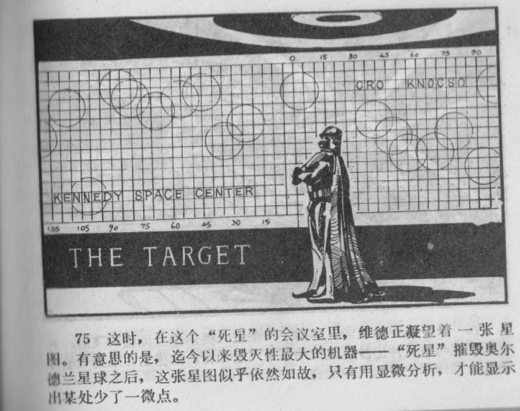


Be sure to click the PDF sections for more images; and make sure to check out this chinese forum for more images from other similar projects!
RPGPundit
Currently Smoking: Stanwell deluxe + Image latakia
Imagine you live in Cold War communist china, and you are told to make a picture storybook about Star Wars (the movie, not the U.S. military program). The only problem is, its impossible for you to actually see the movie. All you have to work with are some promotional posters and materials and a synopsis of the events in the film. On the other hand, no one in mainland China has seen the movie either, so they'll really accept anything you draw for them.
What do you do? Well, the result would have looked something like this.
Be sure to click the PDF sections for more images; and make sure to check out this chinese forum for more images from other similar projects!
RPGPundit
Currently Smoking: Stanwell deluxe + Image latakia
Wednesday, 28 May 2014
DCC Campaign Update: Now With More Gender-Indeterminate Wizards!
In this weekend's camping expedition/adventure the PCs were:
-lost in the Tanglewood forest
-drawn to the conclusion that it was better just to wander around looking for things to kill rather than trying to spend hours crafting some elaborate plan to take out the Smug Elves.
-ambushed by a force of Evil Forest Centaurs
-informed that forest centaurs are dicks.
-reminded with lethal force that 0-level characters shouldn't act like heroes.
-made aware that like in most of the Last World, actual humans are a rarity; however, in this region of the world there is a particular superabundance of mutants.
-surprised by the fact that apparently Shaggy-Red Caveman Mutants are often also Psychics.
-sent the message that their attempt to stop the Eco-Ogre attack on Arkhome had failed.
-not surprised by how little they cared, now that they were safely a half-continent away from the Eco-ogres and their Eye-tyrant overlords.
-warmly greeted by Bolt-O, the conversation-starved production robot.
-able to recruit Bolt-O to their group, by engaging in such diverse topics like "do you think that there is a practical difference between alligators and crocodiles" and "what is your favorite letter of the alphabet, and why?"
-confronted by three of the gender-variant-and-indeterminate archwizards of the Grand Inclusive & Non-Hierarchical Azure Order.
-only slightly less surprised than the Azure Wizards when the PCs' own gender-indeterminate wizard politely declined joining them, since he doesn't actually feel oppressed or set apart at all for being "trigendered" (as the wizard's 10-year old Player called it...)!
-warned about Cannibal Vines.
-nevertheless taken totally by surprise by Cannibal Vines, at the cost of Marak the Wizard's life.
-witnesses to a cannibal-vine-planting operation undertaken by a trio of easily-spooked Furry Mutants.
-able to reach the Azure Tower, only to be sent off immediately to deal with the Furry Mutants and the Toad Wizard of Bobgobdobulz (who as usual want to bury the whole world in mud and swamp).
-forced to face the fact that Bill the Elf is in serious repressed grief for his brother Ted's death, and looking for substitute-Teds in all the wrong places.
-unexpectedly drawn into a drumming competition with the Furry Mutant Tribe.
-clever enough to discover that Bolt-o can double as an excellent steel drum.
-able to win over the Furry Mutants against the Toad Wizard through the power of aggressive drumming alone.
-quick to learn that having 50 Furry Mutant 'braves' at your command is not nearly as useful as it sounds.
-successful at blowing both the Toad Wizard and his Toad Fiend to little bits, with relatively little help from the cowardly and largely useless Furry Mutants.
-determined to settle down for a good long time in the village of the Azure Order tower, to spend a year's sabbatical for relaxation and self-improvement.
RPGPundit
Currently Smoking: Moretti Rhodesian + Gawith's Squadron Leader
Tuesday, 27 May 2014
D&D 5e BASIC/Core Rules: I Told ALL of You So!
So the other shoe has finally fucking dropped. Here's Mike Mearls announcing what I've known for months and had to keep a lid on; what I had tried to hint at and a few of you got, but most did not. Yes, there will be a Basic D&D.
But its more than just that. It will be on a PDF. It will be FREE. And most importantly, it will be the true Core D&D. Not the PHB, not the DMG, not that 10000-feats version. No. The basic version will be the default version of the D&D game, the one that all adventure products will use for their baseline.
This is hugely significant. This is the victory of Old-school thinking over all else, and I don't mind if I take more than a little credit for the lobbying I have done to create and hold this vision as a Consultant.
You're all welcome.
It is also an incredibly bold move for Wizards to make. It means that in theory, all you'll ever need to play D&D will be, in the first few months, the Starter Set and the Basic Rules PDF. And after that, not even the Starter Set. So whatever you get, whatever you purchase or get into from Wizards will not be because they're holding a gun to your head. It will be because they'll be making great products (well, we hope!).
This is, with any luck, the beginning of the end for the whole "endless Splatbook-production-line model" of RPG thinking which only served to create an ever-shrinking mass of aging fanatics while alienating everyone else who didn't want to have to buy every single book.
Making Basic D&D the core D&D rules means that kids will be able to get into the game first, and then become customers of those adventures, expansions, settings or materials that they find exciting. It will serve the "amateur" gamer rather than the hardcore drooling fan, and that's a good thing.
So its time now to give Wizards its due. And to give the Pundit his due, particularly all the naysayers and those who made certain claims about me in the last few days. I win again.
And this time, so does every other D&D fan.
RPGPundit
Currently Smoking: Lorenzetti Volcano + H&H's Beverwyck
But its more than just that. It will be on a PDF. It will be FREE. And most importantly, it will be the true Core D&D. Not the PHB, not the DMG, not that 10000-feats version. No. The basic version will be the default version of the D&D game, the one that all adventure products will use for their baseline.
This is hugely significant. This is the victory of Old-school thinking over all else, and I don't mind if I take more than a little credit for the lobbying I have done to create and hold this vision as a Consultant.
You're all welcome.
It is also an incredibly bold move for Wizards to make. It means that in theory, all you'll ever need to play D&D will be, in the first few months, the Starter Set and the Basic Rules PDF. And after that, not even the Starter Set. So whatever you get, whatever you purchase or get into from Wizards will not be because they're holding a gun to your head. It will be because they'll be making great products (well, we hope!).
This is, with any luck, the beginning of the end for the whole "endless Splatbook-production-line model" of RPG thinking which only served to create an ever-shrinking mass of aging fanatics while alienating everyone else who didn't want to have to buy every single book.
Making Basic D&D the core D&D rules means that kids will be able to get into the game first, and then become customers of those adventures, expansions, settings or materials that they find exciting. It will serve the "amateur" gamer rather than the hardcore drooling fan, and that's a good thing.
So its time now to give Wizards its due. And to give the Pundit his due, particularly all the naysayers and those who made certain claims about me in the last few days. I win again.
And this time, so does every other D&D fan.
RPGPundit
Currently Smoking: Lorenzetti Volcano + H&H's Beverwyck
Subscribe to:
Posts (Atom)