The new and improved defender of RPGs!

Sunday, 15 February 2015

"Real Magick" in RPGs: Spellbooks

"Real Magick" in RPGs: Spellbooks

I've posted previously in this series (on the old blog, but archived here), about some of the misconceptions about how 'occultism' is handled in a lot of allegedly-occult RPGs, and how GMs can modify things to more closely model the reality of the occult scene (a reality that is filled with posers, fakers, and lunatics, but also some truly fascinating stuff).  One of the big ones in modern games is about how occult knowledge is somehow rare or very difficult to access (the classic Call of Cthulhu scenario where magical knowledge is only available in the most obscure places), when the fact is that the problem is not access to that knowledge at all, but the ability to differentiate between the useful and the useless.  I also made a post about how and what a magician's diary looks like, and how these will often be the  most important "grimoires" available in a setting.

Now on the whole I've been focusing on modern settings, but I heard something interesting today on theRPGsite in reference to the "unrealistic" nature of D&D magick.  Someone pointed out that the idea of a magician going around with a spellbook and memorizing spells made no sense.  Magicians should study their books at home, and their spellbooks would be kept safe within lock and key in their towers.

But the truth of the matter is a bit trickier than that.

A magician may very well carry around his magical diaries with him (remember: a grimoire is really nothing more than a heavily-edited magical diary); for two reasons.

First, not to memorize spells but to potentially remember correspondences. There are big tables of correspondences (which are important "components" for magical practice, divination, etc) that someone might be able to memorize, but there's so much to be memorized that a lot of students won't. A good magick student will know the symbols and order of the zodiac, the planets, elements, PROBABLY the Hebrew letters and their number values, and things like the names of gods, elemental signs, the pentagram rituals and hexagram rituals. If he does all that by heart, he's a pretty advanced student (even among serious practitioners; remember, 99% of supposed 'magicians' have barely studied anything at all and don't actually practice any magick).
But even that kind of expert student may not memorize what type of plant corresponds to the moon, or the name of the Angel of the 20th degree of Leo.

Second, you never know when there's going to be new things to write in the diaries!

A magical diary is practically a part of a magician's body; its been repeatedly described by almost all of the great occult authors as the single most important tool of the magician.  You can almost always use it as a litmus test to tell the difference between a serious occultist and a dabbler, dilettante, or fraud: not everyone who keeps a diary will necessarily be doing serious occult work, but anyone who doesn't keep a magical diary is almost guaranteed NOT to be doing serious occult work of any kind.

Thus, the diary is far from an neat and tidy book of instruction (though sometimes material from said diaries are heavily edited to become actual commercial books); they are the frantic scribbles of a madman, and a seriously-obsessed occultist won't be trusting his own recollection to write down some insight or discovery long after the fact, if he can at all help it. He'll want the diary close, so he can record his studies, discoveries, findings or experiences as quickly as possible.


RPGPundit

Currently Smoking: Dunhill Amber Root Bulldog + C&D's Crowley's Best 

(originally posted 17 January 2014)

Saturday, 14 February 2015

Old School is the Least-Worst of All Possible Approaches To Group Power Dynamics


The old-school approach works BEST when it has the best possible person as a GM, yes. And it doesn't work well at all if it has a bad GM.   But that's why you have to WALK AWAY from bad GMs.

Every other approach is in some way based on some variant of how to 'solve' the "bad GM" problem.  But here's the thing: NONE OF THEM DO.   Instead, they hamstring good GMs, while empowering bad players to be either abusive with the mechanics or manipulative over the group in order to get what they want.

The old-school approach has problems, but it's the only one that actually has good odds of working.  Yes, the old-school approach depends on a single guy at the table not being an asshole; but most of the other approaches depend on not one of FOUR TO EIGHT PEOPLE at the table not being assholes.

Democracy is a great principle for running countries; not so great for running tiny social groups, because there democracy becomes mostly indistinguishable from Consensus, and Consensus is (unless very strongly controlled) a system that just lets the biggest asshole manipulate everyone else.

If you say "oh but I trust my group", GREAT! Your GM is a part of your group, right? Then TRUST HIM.

If you don't trust the GM, then you obviously do not trust your group, and there's good odds there'll be at least one selfish asshole among the players, or one self-absorbed narcissistic primma-donna that will abuse 'power devolution' to manipulate everyone else into making the game all about him, or a couple of players who are individually nice guys but can't stop fighting each other over petty shit that, given power and no oversight will make their rivalry into the central conflict of the game sessions, or any number of other things that could fuck up a scenario where instead of just depending on ONE guy to be good, you depend on absolutely everyone being good.

Oh wait, but what about if we make the Game Designer the final authority, through the rules he created? That does it right? Check and mate, motherfucker.

Or not. Because there you're trusting that Luke Crane isn't an asshole. And he is.  Bruce Baugh isn't just an asshole, he's a worthless sack of shit.  And Vince Baker is not only an asshole he's a sick fucking asshole with serious issues.

But aside from whatever personal asshole-issues the designers have already front-loaded into their fucking games, you also have the issue that odds are you can't just ring up the Game Designer every time there's some internal dispute in your party.  The game designer DOESN'T KNOW YOU.  He doesn't know anything about who you are, he lives thousands of miles away, why the Fuck are you going to trust him to decide what's best for your party, and not Jim who you've known since high school?!

And assuming you can't just ring up or email the designer every time the party has an internal dispute, you are still ultimately giving deciding power to someone else.  If the point of giving power to the Rules/Designer is to avoid letting the GM be 'abusive' then presumably you'll not let him actually change the rules; and this means that by default, the power will lie with the players.  Because if the GM can't just say "NO" to the rules, then what you're doing is giving the group's power away to whichever player or players is the most obsessive-compulsive little rules-lawyery piece of shit that has read every last page of that rulebook and spends more time than everyone else in the group put together thinking about those rules and how to manipulate them and use legalisms to get his way.

So yes, the old-school approach is not some kind of theoretical best approach.  But it is the least bad of any approach we have ever devised. Enlightened Philosopher-King Monarchy, baby.


RPGPundit

Currently Smoking: Winslow Crown + C&D's Crowley's Best

Friday, 13 February 2015

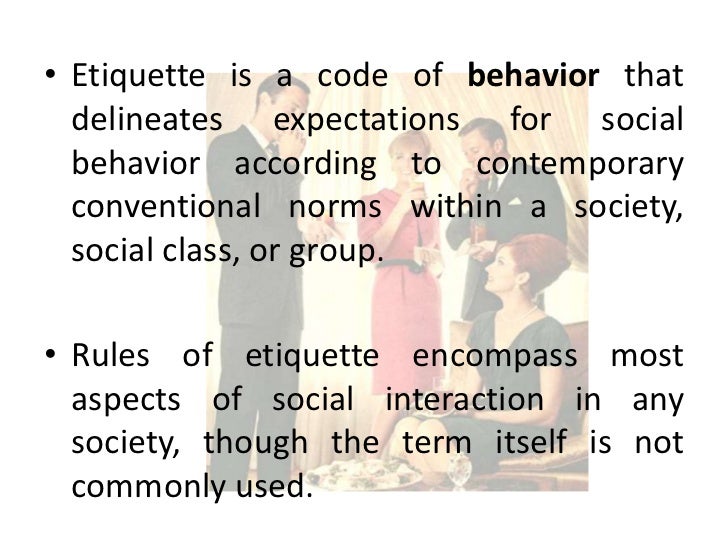
Proper Courtly Behavior, Social Class, and "Etiquette" in D&D

It's funny, how much attentions some old-school games pay to something like accurate accounting of supplies for dungeon expeditions (how many torches, how many rations, how much they weigh, etc. with tremendous meticulousness), and yet how little attention they give to social factors of the world; to thinks like the differences in expectations and behaviours in the social classes, or how to behave in front of nobility.  I've found it super-common, in other people's groups, that there's a total disregard for this sort of thing, that it's treated like a really bad American Movie about the "Olden Days" where everyone is still fundamentally acting like 21st century people, where you have the peasant guy wise-cracking in front of the knight at his expense or the scullery maid bad mouthing the duke and being respected as a heroine, rather than being sent off to be brutally beaten.

And this becomes a case of contention with new players to my groups; because my fantasy games are very rarely like the above (unless it's something completely Gonzo, like my current DCC group).  We had more than one fresh-faced brand-new player of Albion that didn't realize that being in the Earl's court was possibly more tricky terrain than being in a catacomb, and who thought they should just get to chime in with their opinion whenever.  The most egregious cases thinking they could tell their social betters off, sure, but even the relatively smarter newbie-players never at all hesitating to think that at a meeting where they were allowed to be present they should of course get to give their opinion unbidden!

(and no, I didn't punish the players for what they didn't understand; not the first time.  The guys who still didn't get it after repeated occasions and wanted to keep acting like hip 21st century rebels standing up to 'the man' ended up getting their natural comeuppance)

Now, it's to be expected that given this total disregard for proper etiquette in most games (and noting that D&D is fundamentally an American game, and Americans don't even begin to understand etiquette anymore, and they were pretty shaky on it from the start), we don't get much help from either rules or more setting books.  At best, we get some kind of 'etiquette' skill, that treats the understanding of what to say or how to act in front of your social superiors, equals or inferiors as some kind of "knowledge" skill.  On its face, that might seem a good choice (probably, an "obvious" choice to a North American that really doesn't know better, for lack of a class system), but it isn't.


(Etiquette isn't a set of 'game rules' that anyone can learn and then be part of the in-crowd; this is a mistake that 21st century North-Americans, and 21st century North American geeks in particular, tend to make.  Etiquette is about just about everything to do with how you behave within your culture and within your social class position in that culture)


There shouldn't be an "etiquette" skill (or if there were, it shouldn't be what you roll for how to act in a social situation). The real answer is that "etiquette" should be determined by Social Class, and what there needs to be is some kind of social class indicator (not necessarily a mechanic in the sense of a 'number', but something that tells you what your PC is), and on anything that isn't being role-played (and note: as an old-schooler I really think most things SHOULD be role-played), that social class indicator should be what governs how things go down.

It's still a little bit true even in our society to this day, that 'etiquette' is not something you consciously learn (or in those rare cases where you try, you will at best do it BADLY); instead it's what they used to call "breeding". It's actually a whole set of instruction-by-osmosis from childhood that a person has based on the social class they are born into, which are different if you're born into the working poor, the bourgeoisie, or the aristocracy.  This means that any situation where an 'etiquette skill' would need to be rolled (as in, to see if the PC knows or doesn't know how to behave) would be one where the PC has already failed, and will, AT BEST, do it less badly than someone who understands where they belong from the start in that situation.

So in most cases, NO roll should be needed at all. If a character is from a certain background they will already know how to behave in a given situation; if they are not, they cannot know (but may know how to be appropriately deferential, as that's an inherent training people from the lower classes receive). Something like Charisma modifiers can determine how effectively they perform or if they are less or more attentive to social conventions and expectations.

But as for "knowing what to do"? The ONLY time I could see an etiquette "skill" being required would be if you were talking about someone who specifically had researched the subject in order to study it academically (someone working in some finishing school or that sort of thing; or a scholar from one culture who had studied the proper manners of another culture for anthropological or diplomatic purposes) or if you had some rogue who had been training in order to know how to falsely impersonate a member of a different social class than their own (in which case, you might as well just use Disguise or Acting or whatever, because that's what it is).

People make the mistake of treating etiquette as a "do I know this" skill. This is probably because in our modern times it seems like no one knows any etiquette; in point of fact this is not true, its just that we associate "etiquette" with old-timey "manners" from the Victorian age.  Etiquette isn't really about which spoon to use, that's the most superficial aspect, and it seems like a knowledge-thing (and at the same time so silly) because that's only the most superficial of the layers of it, and one our society has largely discarded. But we do, in fact, still have the same lower-layers, even if not to the same extent.

We have modern "etiquette" all the time, and that's what you have to envision 'etiquette' as if you want to understand it in a medieval context too. You see it whenever you have someone raised in a minimum-wage or welfare-dependent household having trouble fitting in visiting the family of their "slumming-it" upper middle class girlfriend/boyfriend (among countless other situations like those). The "fish out of water" syndrome happens because of differences in social class, where people have been taught in early childhood how you're EXPECTED to act within your class. That code of 'how you're expected to act' is etiquette, and it applies in all kinds of different situations; but your parents can't teach you about situations they don't know, and even in events common to all classes (family get-togethers, for example) the "rules" taught of how you're supposed to behave, what you're supposed to say, dress, how and when to eat, acceptable subjects of conversation, etc., are different from one class to another. Etiquette is often portrayed as a set of rules of 'good behaviour' but that's not what it really is at all!  Etiquette is actually a code for how to act "like one of us", whoever 'us' is. Knowing to eat a chicken-drumstick with a knife-and-fork is proper etiquette at an upper-middle-class table, and knowing to eat a chicken with your hands is proper etiquette in a lower-class table, and being in breach of either of them produces the same result: you get identified as an outsider, as someone who doesn't belong or who is refusing to belong.

What I'm saying is that a PC raised in a noble household shouldn't need to "roll" anything to know how to act toward ladies at court; he's been taught that ALL HIS LIFE. The GM should instead just tell him what he knows about how he's expected to act, and then the player should decide whether they want to be scandalous by intentionally ignoring those rules or not. Its never ability, it's willingness.


(breaches of etiquette caused by accident or lack of care should be most unusual events.  Also, the fact that hardly anyone today could look at this picture and actually understand what's going on is proof of what I'm talking about)


Likewise, unless someone has been specially trained/studying etiquette actively and on purpose, there shouldn't be any way they could possibly know how to act, because etiquette is MEANT to root out 'intruders' to social class.  It's like sumptuary laws of the mind, rules taught to prevent impostors from climbing above themselves (though it also works the other way, rooting out 'fakers' from the higher classes trying to pass themselves off or hobnob undetected among the hoi-polloi). Obviously, if a peasant PC intentionally sets about getting training in how to act, then they may be able to attempt it, but otherwise, generally speaking, people are never taught the REAL secrets of etiquette. It's like the way people in the aspiring middle class used to think it was 'fancy' to raise the pinky finger while drinking tea, while actual upper classes would never ever do that and would immediately recognize it as a sign of ignorance. Or how when a gentleman asked you "how do you do", you never said "good" (much less "bad"), you always only reply "how do you do" right back, neither of you ever actually answering (unless you're dear dear friends). Just learning what spoon to use for what course is not going to save you; though that, too, was a set of brutal rules meant to distinguish commoners from aristocrats, natives from foreigners, the people who should be there (in other words) from those who have no place being there.


(one place where you can still see this is with Asian food. Most white people have no idea, even those who think they do, of all the little rules of behaviour that are going on in a sushi place or a Dim Sum restaurant, and they are used to distinguish the 'civilized' from the 'barbarian'. When I lived for some time in Vancouver's Chinatown, I had to learn enough of the secret etiquette of dining that I can now surprise most 'locals' at a Chinese restaurant, but even after all that time and learning it largely served to make it clear to me just how impossible it would be for me to ever really be an 'insider'; instead, all my study of etiquette for dining at a Dim Sum restaurant or what-have-you has, at best, made me an oddity, a curiosity, the "white guy who knows how to drink tea properly and doesn't eat like a total slob"; and short of spending decades inside this culture, that's the absolute best anyone could hope to do)


In a fantasy society (or any society up to about the mid-20th century) people could interact with higher or lower social classes; but NOT as one of them.  Instead, lower class people were taught (also as etiquette) how they should behave, as lower class people, in front of their "betters"; and likewise, upper class people were taught the 'proper' way to behave around their 'inferiors'.   Not to 'blend in', but to specifically highlight those differences. This too should never ever need to be "rolled for"; a peasant shouldn't ever have the risk of accidentally failing to show proper reverence to a Lord, because it has been unconsciously drilled into them by osmosis their entire lives.  Again, unless they were willingly and willfully choosing to break those rules in an act of defiance.

Given all this, and on such an old-school subject, it comes down to roleplaying and not rolls.  Etiquette and proper behaviour at court should be something explained by the GM, almost never needing to be rolled for, and where the GM must go to lengths to emphasize just what the PCs already know they need to do or how to act.  And then, it is up to them if they choose to break those rules of behavior or not.  But if they do engage in such an 'act of defiance', the GM may want to make clear to them that this is another case of the past being "another country" and that back then 'fighting tradition' was almost never something that anyone was going to look at with any kind of admiration.


RPGPundit

Currently Smoking: Ben Wade Rhodesian + Image latakia

Thursday, 12 February 2015

Lords of Olympus: World-Walking Question and General Advice

So I recently had a couple of questions asked to me about Lords of Olympus, and thought I'd make the answers public here.

Question the first: a confusion as to whether all three of the divine realms (Olympus, Atlantis, the Underworld) could be accessed by any divine road, or if only the road related to the specific realm led there.

Answer: the three roads cross over. That is to say, any world that has open air has the Olympian Road, any world that has underground has the Hadean road, and any world that has rivers, canals or large bodies of water has the Atlantean road. So any normal world might have 'access points' to 1, 2, or all 3 roads.
But you can only get to Olympus by the Olympian road, you can only get to the Underworld by the Hadean road, and you can only get to Atlantis by the Atlantean road. The other two can get you close, maybe, but can't actually ever lead you to the place you seek.
That's what the game originally intended. It means that someone who only has, say, the Atlantean road, can never get to Olympus with it. They need to find another means to get there (usually help from another PC or NPC).


Question the second: How long did you envision it taking to travel from one of the main divine realms to another?

Answer: In general I envision it as normally a trip that (without really stopping anywhere, but not rushing at crazy speed) takes maybe three/four days or so to get from any one major realm to any other IF you know where you're going (otherwise, the first times, it can take a lot longer, like a week or two, because you can't envision where you're going). Likewise, if you are 'hellriding', going as fast as you possibly can, you might be able to get there in two days instead of 3-4.
Also, if you are taking people with you, that also slows you down, so you have to add a few days or even weeks (if you're taking something big, like an army). And all of this assumes nothing interrupts you and you have no difficulties on the trip.
I see the realms as relatively close to one another on the world-scale. On the other hand, I see Modern Earth as being one or two weeks away from any of them; and the really weird worlds (places of crazy physics, ultraweird-fantasy or super-scifi) taking perhaps three or four weeks away from the divine realms, or even further, going out and out until even the laws of time and distance start to make no sense.


(if you want to go here, for some reason, you better pack for a longish trip...)


RPGPundit

Currently Smoking: Lorenzetti Solitario Egg + Gawith's Navy Flake

Wednesday, 11 February 2015

Putting "RPG Inclusivity" Into Context


We had an interesting discussion over at theRPGsite about "Inclusivity" in RPGs.  Some people get annoyed at what they perceive as the inclusion of "token" inclusive characters in published settings or adventures, particularly characters that seem totally out of place with the perceived society or values of the setting (as one poster put it, more or less, the problem is when you have characters running around in a medieval fantasy setting that seem to have 21st century middle-class liberal west-coast values).  Of course, others also get annoyed at the absence of these same characters.

Now, lately the "refugee crisis" of posters from rpgnet looking to be able to have actual conversations rather than politically-correct-hugbox environments has reached such a fever pitch that we have actual (notorious) rpgnet moderators coming along to write in the free atmosphere of theRPGsite; and I found myself in the amusing position of largely agreeing with a post on this subject by the infamous Modclique member "Future Villain Band", who I believe had some less-than-flattering things to say about me and theRPGsite in the past and yet now has found himself a 168-post-and-counting homestead there.  He pointed out, perhaps expecting disagreement, that it was just as annoying to him to see a setting where there are magical luxuries the real medieval-world didn't have, a presumption of potential female adventurers, and yet for totally arbitrary reasons women couldn't be guards; or where magic (including transformation magic) is plentiful and yet its somehow unheard of to see a transgender character.

Well, as for me, I absolutely agree. Shit, if the setting is one where magic to change your gender is relatively easy, I would think the setting would then all but DEMAND that being a normal thing.


As for sexism, yes, the setting designer should shit or get off the pot: either make it clear that women are equal in the setting or explain why they aren't.
I would almost be equally not-ok with the idea of a world where everything closely follows medieval historical models yet for some reason all women are accepted as equals and get to be half of the king's guard and are regularly taken seriously in positions of power without any explanation; as I would be with a world where society is nothing like medieval historical models and yet for some reason there are no women in the king's guard just because.... the only thing that pisses me off slightly more about the former than the latter is that the latter is just a violation of logic while the former is a violation of both logic and a set-up that actually happened historically (and thus feels like blatant politically-correct historical revisionism).


The bigger issue is that the self-styled champions of inclusivity are usually obsessed with two points that have little to do with their alleged concerns for social justice:  first, they want to paint a picture of regular gamers (and ESPECIALLY OSR/Old-Schoolers) as reactionist dinosaurs who will refuse to play in a setting that isn't all white-heterosexual-males all the time.  Second, they will try to crusade to just cut-and-paste often ridiculously tokenized concepts not so much out of any kind of concern for creating any kind of meaningful 'equality' as much as out of a desire to "punish" those evil OSR-gamers, or to confirm their prejudices about regular gamers by noting their protests while patting themselves on the back as to how much more evolved they are; never understanding that the main 'protest' from the vast majority of regular gamers isn't "we don't want women, minorities or LBGT characters in our D&D!" but rather "what is being done makes no fucking sense".

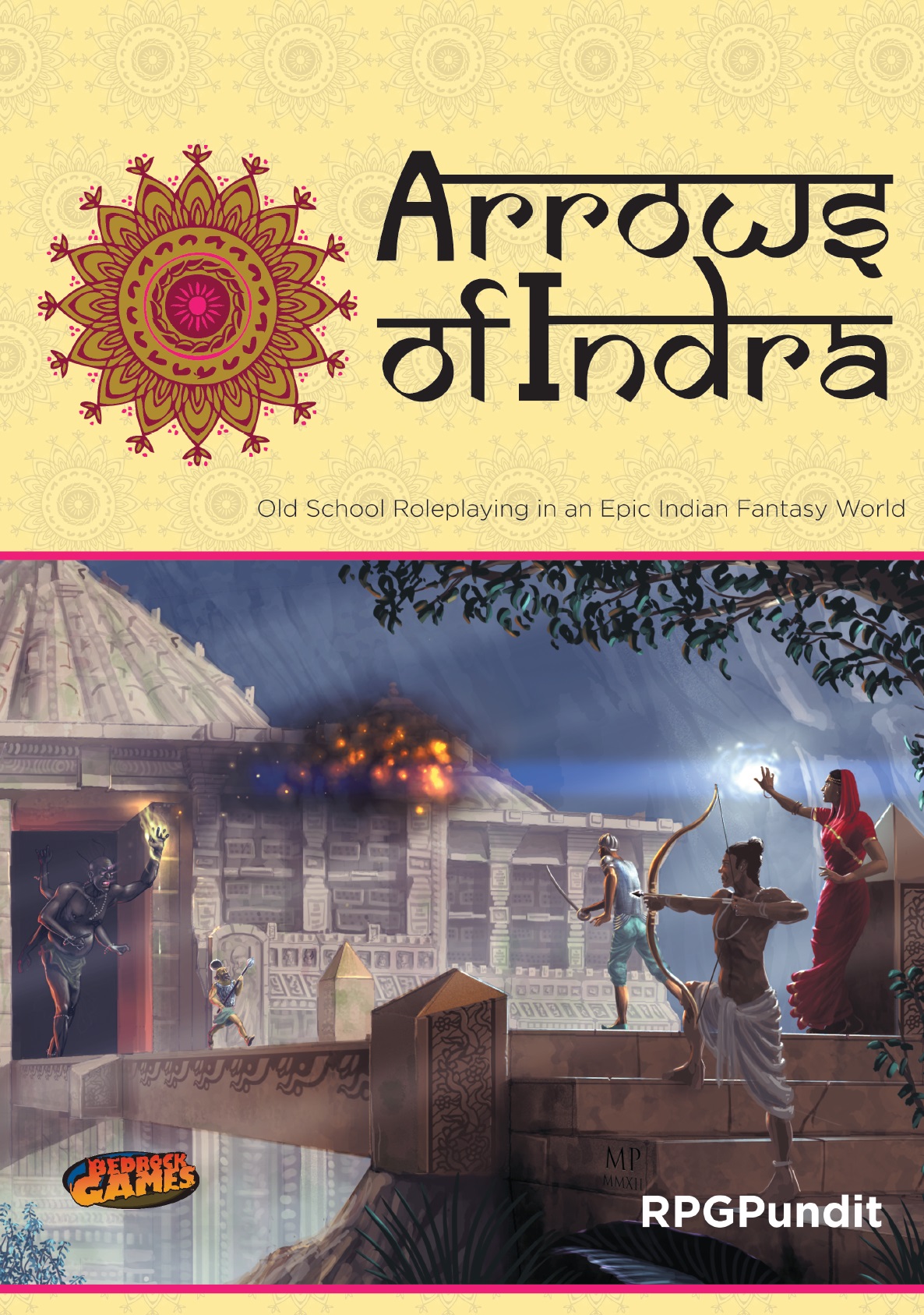
So in rebuttal, I present to you a little OSR game I wrote called Arrows of Indra. No white guys in it at all. But what it DOES explicitly have is transgendered people in it (there's even one on the cover!).


But hey, before that there was Al-qadim, Rokugan, Kara-Tur, and Tekumel. The first three were very amateurish in the cultural portrayal, and the last too weird to be popular, but each of these featured no-white-guys; in settings that were socially and internally consistent. And the last of these was like the SECOND RPG SETTING EVER (if you count Blackmoor and Greyhawk as having been the same thing at first, which it pretty well was).

The idea that Old-school gamers only want to, or need to, or ever did only play characters that "look" like them is ridiculous.

RPGPundit

Currently Smoking: Raleigh Volcano + Brebbia No. 7

(Originally posted January 15 2014)

Tuesday, 10 February 2015

Everyjoe Tuesday: It Was the Middle Part

Today's Everyjoe article has a slightly academic look at a question important to conservatives in the U.S., because a lot of them talk about the tremendous importance of Christianity's role in the United States' founding and on the history of western civilization in general.

But just how important is it? What role did it play?

The answer is: the middle part.  It was act 2 of a 3 part act. So, important but not inextricable, western civilization didn't start with it, didn't end with it, and not really all that important to cling to now.

If you want the full story, and the question of how this fits into Why U.S. Conservatism Needs a Divorce (Part II), please check out the link.  Please reshare it, and please go comment over there (comments here are closed, but I will answer your comments there!).

RPGPundit

Currently Smoking: Lorenzetti Solitario Horn + Gawith's Navy Flake

Monday, 9 February 2015

What the Fuck is With This Picture? Or "on 'Fake Geek Guys' now".


Seriously, what??  I saw this going around a couple of times now on G+, and I seriously don't get it.  I mean I do get it, but I find it pretty fucking pathetic.  Pseudo-activism and Professional Victimhood have no currency with me, and I'd be remiss if I ignored it when it was stupid straight white male gamers doing it.

What exactly is the fucking point of this supposed to be?  A few years back we had the Lawncrappers bemoaning what they claimed were "fake nerd girls", because these losers had used the fact that they were 'nerds' to explain why they hadn't gotten laid their entire lives.  Women just didn't understand their nerd ways, they claimed.  But all of a sudden geek culture was popular, there were tons of women who very clearly did understand, and these asses still weren't getting laid. "It must be their fault!" they told themselves, "they must not be REAL nerds!"  And hence, rampant misogyny ensued.

So what, now its about 'fake nerd guys'?  Other geeks who do regularly get laid are the bad guys?
Are we supposed to feel pity for the guy on the left, or contempt for the guy on the right?  Is that the point?

Because I don't particularly feel any pity for anyone who can't sort their fucking life together to figure out that life owes them NOTHING, and that they have to stop expecting everyone to "accept them as they are".  If they want to be like the guy on the right, if they want the geek girlfriend, they need to actually WORK at it, and stop making fucking excuses or thinking that their alleged and probably non-existent intelligence or their vast knowledge of Star Trek trivia means they can be as socially retarded as they want and not have to learn the basics of how to conduct themselves around other people.  You know, things like bathing, personal grooming, knowing how to dress, knowing how to act and react appropriately around other human beings, knowing what topics of conversation are appropriate for one environment (big hint, fuckers: talking about RPGs or comic books or geek movies is NOT the right answer in every possible situation that everyone will always find terribly interesting); and generally figuring out that CHA (not INT, as great as INT is) is the most important stat in the world.

If you're reading this, and you're a young teenage gamer who feels sorry for himself for many of the same reasons that picture above delineates, I can only tell you that nothing will get better until YOU decide to change how you are.  It's not a betrayal of everything you stand for, it's just figuring out that those inconveniences like trying to figure out how to bathe, dress, or speak with others about things that are not necessarily your own obsessions are going to be a necessary feature of improving your future quality of life.  Anyone can do this, even if it might be harder for you than it might be for some other people, that isn't a reason not to do it, it's just a reason to work even harder at it.  Trust me: Figure this out, and start to do it, and your life will improve in ways you couldn't believe.
Do nothing and keep whining about it on the internet, and nothing is going to change for you. Simple as that.

RPGPundit

Currently Smoking: Lorenzetti Solitario Egg + Brebbia no. 7