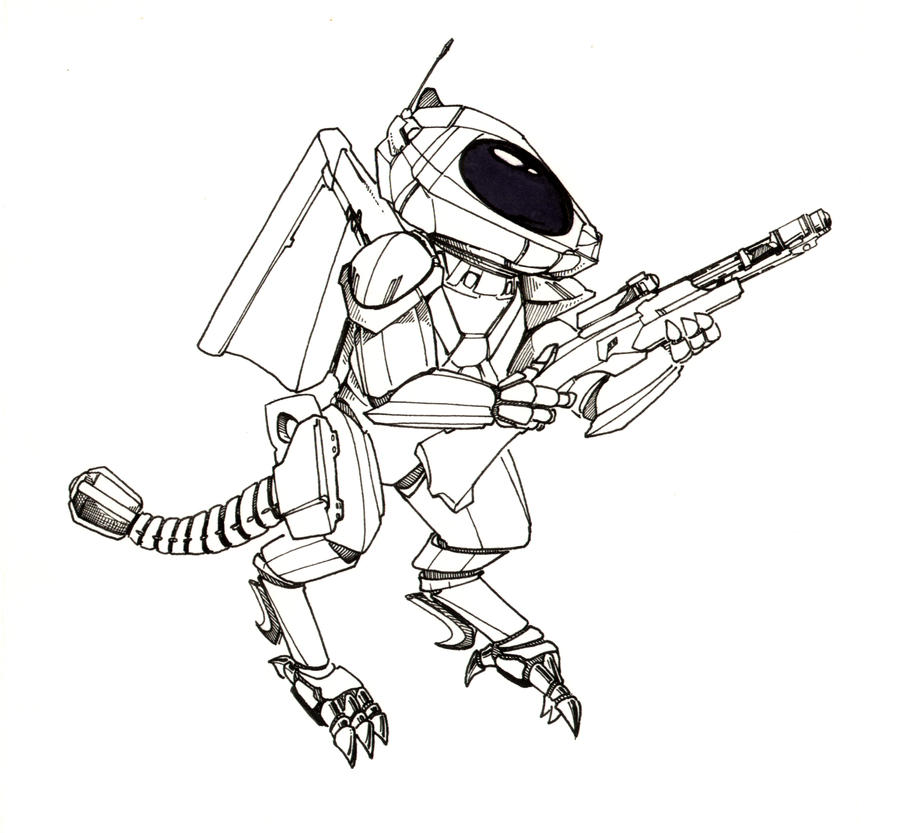
Yeah, given what the previous Trav campaign reports sounded like, you'd think that it couldn't possibly get any weirder, but now this is happening:
Yes, it's the attack of the Droyne. Or rather, the Robot Droyne, who have come to kidnap the PCs just as they were in a life and death battle to save the Neutrals from an attack of vicious dog-men! But what's a bit of accidental genocide when the PCs have an appointment with none other than Grandfather Paradox himself, the leader of the Ancients who (to their surprise) is still alive and kicking to this day?
And of course, he looks like this:
But if that wasn't trippy enough, apparently his way of saying 'hello' is to immediately shoot them back 300000 years into the past, where they occupy the bodies of Ancients (so basically these guys):
Where they have to fight these guys:
Kidnap these guys:
And deal with the annoyance of these guys:
Yes, the distant past of the Ancients Civilization was a wacky place.
RPGPundit
Currently Smoking: Davidoff 400-series + Gawith Balkan Flake
Well, the entry-before-last has certainly sparked a whirlwind of commentary and debate. And, it has led me to question: what are the fundamental causes for certain people's obsession with RPG theory?
It seems that most game theory is based on achieving some kind of "consensus" or "communication" between the DM and the players. Unfortunately, this usually takes the form of disempowering the DM, something that in my experience virtually guarantees an unstable gaming group or an unpleasant experience. Someone's got to be the Alpha, motherfuckers, and if your DM isn't the Alpha in your gaming group, you're all fucked. Cause you know someone else will be, and if that someone else is a player, the whole game goes down in smoke as it's turned into one dude's ego trip.
"But surely", you say, "what you are proposing is that it's all just the DM's ego trip"? No.
Though I do concede that this is probably one of the experiences that has led many people down the road of Theorist Swinedom: at some point, somewhere, they had a shit-head DM (apparently, in many cases a Vampire Swine) who made them miserable by making the whole game about his plot (or the Vampire metaplot) and basically made you want to cut your balls off rather than game like that again.
Well, the theorist's first mistake was playing Vampire. But of course, you don't get rid of Swine-based problems by becoming a Swine yourself, which is what Ron Edwards and the Forge-ites have done. But the second mistake may have been just as crucial: picking a shit-head DM.
A good DM, to be a good Alpha, has to have leadership qualities. And narcissism is NOT a leadership quality. Arrogance just might be, but narcissism ain't. So a DM that wants to make the game all about him and his own grandeur is a poor candidate for DM-hood. The answer to all this is very simple: you must have a DM who is definitively in charge and keeps the worst of player abuses and whims in check, but who knows well enough to put the focus on the players and give them a sense of involvement in the game. A DM can't be afraid of saying "no", but he must also learn that if there's no good reason to say "no", he should say "yes"! Hell, sometimes he can get farther by saying "Yes" and then moving the players whims into dangerous directions for them. As Oscar Wilde said: there are two great tragedies in life... one is not getting what you want, and the other is getting it. Give your players enough rope and you can use it to royally fuck up their schemes. The Great Erick Wujcik taught me that.
But let's get back to RPG Theory. It seems to me that most theorists, regardless of whether they accept or reject the rest of Ron Edward's rantings, seem to accept his argument about the "Impossible Thing". Namely that the claim of RPGs that the DM is the author of the ongoing story, but that the players can determine the actions of their characters as the protagonists is somehow an unsolvable paradox.
What the fuck?! THAT is seriously the theorist's intellectual Mount Everest that they can't climb!? That's why they have to make up all this shit about giving the players "agency" and taking control of the game out of the GM's hands? Well I must be a fucking genius in that case, because it took me all of two seconds to solve your "Impossible" dilemma, and I've been roleplaying for decades without running into any problem regarding it.
The answer is simply this: Both the players and the GM are the authors of the "story" of an RPG. The DM is the author of the premise and the context, and the players are the authors of the execution. The DM is the one that sets up the story, and handles the surrounding characters and ongoing events, and the players run the protagonists (created within the confines and boundaries of the DM's premise) autonomously guiding themselves in making choices to resolve the story.
I mean, fuck.. that's no great secret, that's pretty much the fucking definition of ROLE PLAYING GAMES. You may have heard of those?
For fuck's sake, that's why things like story-based gaming, or the more brutish "railroading" are such BAD things. Likewise, that's why a weak DM, or the "monty haul" are likewise bad things. Either of those scenarios mean that one side in the equation is failing to cover his ground, or trying to push into doing the other side's job. This might be a huge revelation to the theorists out there, but the rest of us have been aware of this shit since at least the early 80s.
So yes, Vampire and WW games and story-based gaming are things that fucked up the hobby, and created a whole group of fucked up people who game poorly. I've been saying that all along. But the solution to that is not to be found in some kind of "new deal" where the DM is reduced to a fucking social worker who enables the Player's every crapulence. Nor is it to be found in obsessive micro-games that try to create some kind of "collective story-telling" exercise. It is found in the very foundations of roleplaying and in restoring the traditional GM-player relationship. It's found in having a DM who creates a good premise without getting hung up on it going exactly the way he wants it to; and having players who don't get hung up on getting everything they want at the beginning but instead playing within the boundaries of that premise and making choices and being proactive to find a solution to the challenges the DM presents them with.
Ok, dear readers: the good news is that Dark Albion is almost done! As proof of that, we've now gotten to where we're talking covers and preparing to send out the print proof for final revision.
But, we've hit a slight snag of sorts: we can't decide which cover image to use! That's where you come in. Here are three potential covers for Dark Albion: The Rose War:
1) The old-timey cover. This one is the one most in line with our interior art, which consists of medieval art for the most part:
2) The "choosing the roses" cover. This is one of my favorite pieces of art, and is of course directly connected to the theme of the "war of the roses". On the other hand, it may not be sufficiently action-focused. What do you think?
3) Original artwork by Dominique Crouzet. Dom made his own cover, depicting a battle-scene. This would be the most OSR-like of choices, I would think. But of course, it lacks some of the classy 'artsyness' of the other two.
So tell us: which one do you like best? 1, 2, or 3? Give us your vote in the comments. We'll be tallying up the count to see what the overall impression of our public might be. And whatever gets the most popular support will be what we go with.
RPGPundit
Currently Smoking: Savinelli Full-Bent + Gawith's Balkan Flake
In continuing to detail the various areas of the Bharata Kingdoms setting, I now get to the weirdest one of all. The Bharata kingdoms are not 'based on' India, they are a direct copy of "Epic India". Now, what is "Epic India"? It is not exactly the India of history; because history tells us that at the time the Mahabharata war took place nothing was quite as developed as these kingdoms appear, and of course there wasn't all the supernatural stuff. Bharata Kingdoms India is about as authentically "India" of history as "Arthurian England" is authentically England; that is, based on history but infused with enormous amounts of myth (and the history is sometimes jumbled through different time periods).
What all this means is that almost all the Kingdoms and City-states that I detail in Arrows of Indra are actual places, that actually existed. They didn't ever quite look exactly like they do in the Bharata Kingdoms of the setting, not exactly at least, but they were all real places.
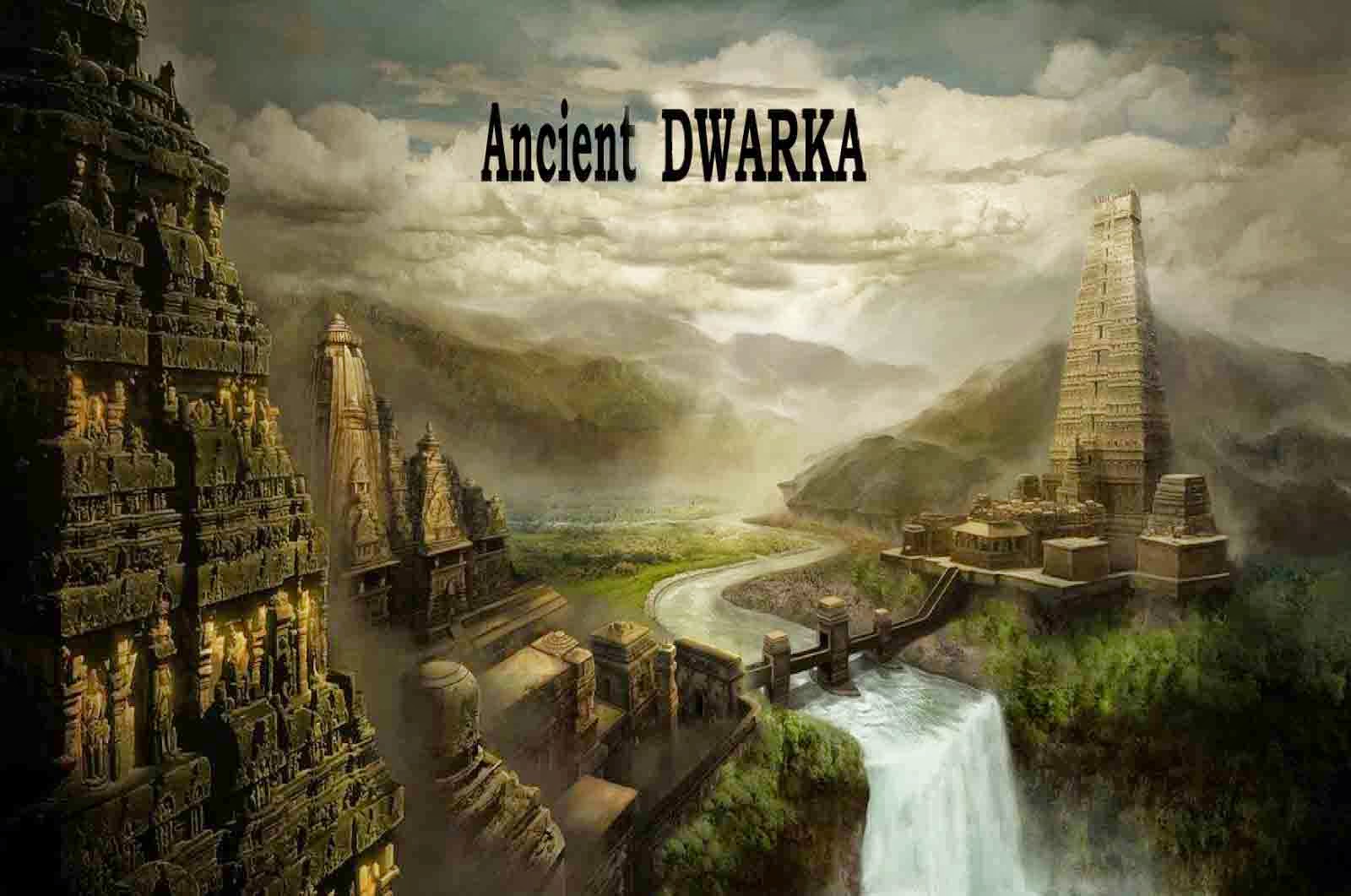
All except one. The Island Kingdom of Dwaraka, found far to the south of the rest of the Bharata kingdoms, off the coast of the main landmass, was never a real place (as far as we know). It is, rather, the Indian version of the story of Atlantis. Of course, Hindu fundamentalists have gone to great lengths in their efforts to try to "prove" that the place really existed, mounting under-water 'archeological expeditions' that are reminiscent of the poor Mormons' expeditions to central america desperately trying to find any scrap of evidence of the lost tribes of Israel in mesoamerica; the Hindu version usually finds some underwater rock formations that everyone agrees are geological except the fundamentalists (who claim it's "proof" of some sunken city).
In any case, in game terms, Dwaraka is a pretty cool part of the setting. Here's what we know: Dwaraka means "city of many gates", and in the setting it would be the richest kingdom in the entire world. Its buildings were decorated with gems. The buildings are covered in gold, and built as high as the clouds. It features spectacular temples.
The volcanic island the city is built upon is rich and lush in agriculture. The Dwarakans are masters of sailing ships and navigate all over the world, going to distant lands (like the Golden lands far to the east) and bringing back goods and curiosities. They also exploit all the coastal area around them which is largely uninhabited. The city is protected, both in the sense of favorable climate and spiritual protection, by the mountain Govardhana, which is also a god. The local population engage in a great annual festival to the mountain-god that is unlike anything else in the world.
Ancient legend holds that Dwaraka was raised up from the ocean, and the city was built along perfect and orderly lines in a single day by the Engineer-god Vishwakarma. What few people know, however, is that the island is doomed by prophecy to sink back into the sea at the end of the Third Age, when the great Avatara of the age (eventually revealed to be Krishna) finally dies in his mortal form. The wise and Holy-aligned sages of the island accept and prepare for this eventuality; some of them may seek to try to prolong the age for Dwaraka's sake. But there are a few who may also be too fond of Dwaraka and its opulence and may try to find a way to sabotage this prophecy, even if it means turning against the will of the Gods.
At the default start point of the Arrows of Indra campaign, the city of Dwaraka is governed by a council, as a kind of republic, ruled by the brahmin nobility who are generally wise and good rulers. Later on in the chronology of the setting, Krishna will evacuate his home city of Mathura in the face of the great invasion of the emperor Jarasandha, who is set upon conquering the entire world. The nobles of Dwaraka invite Krishna to bring his people there, and to rule over the island as its King.
In a standard Arrows of Indra campaign, the city-state/island of Dwaraka doesn't itself offer tremendous opportunities for conflict, except maybe when the emperor Jarasandha lays siege to it. But if you have Dwaraka as a home-base for the campaign, you could have sea-faring adventures that would allow the PCs to travel to all kinds of unusual places: the depths of the Dandaka jungle, strange kingdoms to the south and west, magical islands of all sorts, and even to the distant lands far to the east of Bharata (potentially allowing you to incorporate material from other OSR products, like Red Tide or Qelong, or for that matter Oriental Adventures, depending on just how weird you wanted to get).
Dwaraka could also allow you to play at a whole other power-level from a more standard third-age Arrows of Indra campaign. Its clearly implied that Dwaraka is a vastly more advanced civilization than the other Bharata Kingdoms, retaining many of the qualities of the Second Age; it would not be by any means a stretch to suppose that magic and magic items, even of epic level, are far more common there than elsewhere. Superweapons and flying Vimana chariots would not be as rare in Dwaraka (whereas in the rest of the Bharata kingdoms they are truly rare artifacts, uncommon remnants of the previous age).
If you really wanted to go wild, Dwaraka would even be the obvious place to incorporate 'super-science' to your AoI campaign, bringing in material from sci-fi OSR products. Its the sort of thing that has been dealt with in Grant Morrison's "18 days", for example:
In any case, if you want to weird-up your AoI game, Dwaraka is a great place to go.
RPGPundit
Currently Smoking: Gigi bent Billiard + Image Perique
Someone asked, in response to my last blog post, if Dark Albion was going to be set in a fantasy world loosely based on England in the War of the Roses (in the same way, say, Westeros is a fantasy setting loosely based on England during the War of the Roses) or if it is going to be an actual D&D setting book for playing in England in the 15th century. I thought I should repeat my answer here, in case anyone else had doubts:
Dark Albion is set in a fantasy version of England. That is to say, it is absolutely recognizable as England (same cities, people, culture, conflict - the Rose War-, and culture) but it has been infused with certain fantasy elements: there are Clerics (who are a special religious order), there is Law and Chaos, magic (in the form of university-trained socially-tolerated Magisters, elf-blooded Cymri Travelers, witches, and chaos-cultists), monsters (though you won't run into these in most civilized regions, but rather out in the lonely places), etc. There have been some slight variations from the original history, but on the whole most of the material there is based on actual 15th century history, including the chapters on Law & Justice, Equipment, and other cultural details like fairs & tourneys, the court, and even potential adventure areas based on local folk tales.
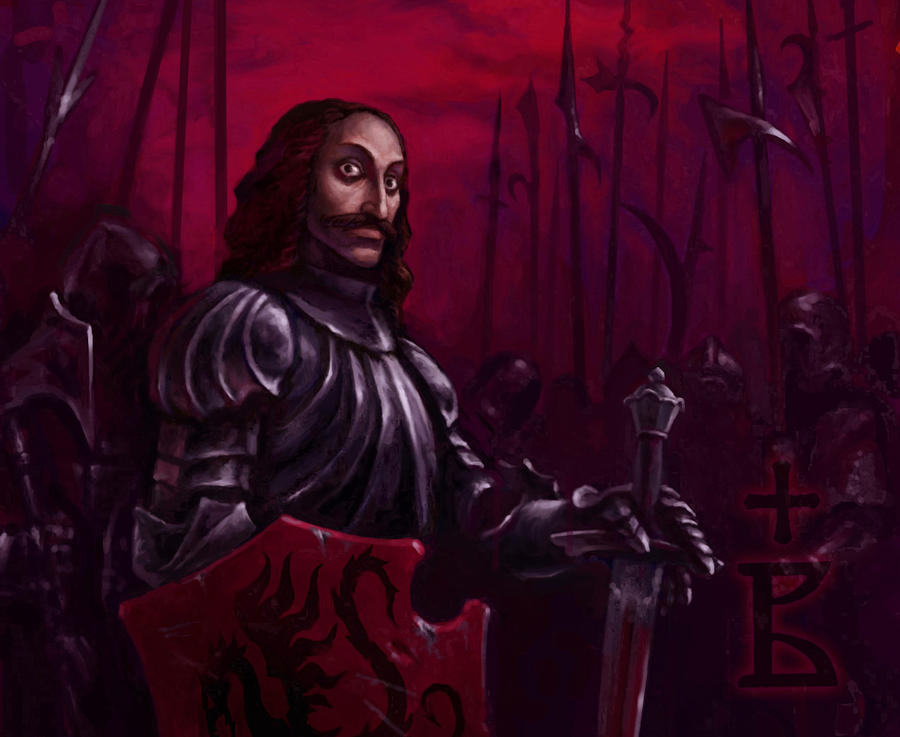
Now, it won't be precisely 'historically accurate'. I've taken some liberties. The English mountains are a bit taller and scarier. The interior areas of Wales are still full of rebellious tribesmen. Hadrian's wall is fully-functional. The Star Chamber already exists. I've changed the Catholic Church into the Law-aligned Church of the Unconquered Sun. And while there will be large sections on places outside of England/Albion, these areas will use even more 'license': Scots' Land and Eire Land are full of barbarians and the supernatural, most of what we think of as France is full of literal frog-men, and in the future of the setting Dracula will really be a vampire (though he's not at the start of the campaign).
(for some people this sort of thing:)
(is as exciting as this:)
(or the courtly-intrigue with a huge cast of fascinating characters thing:)
(or this:)
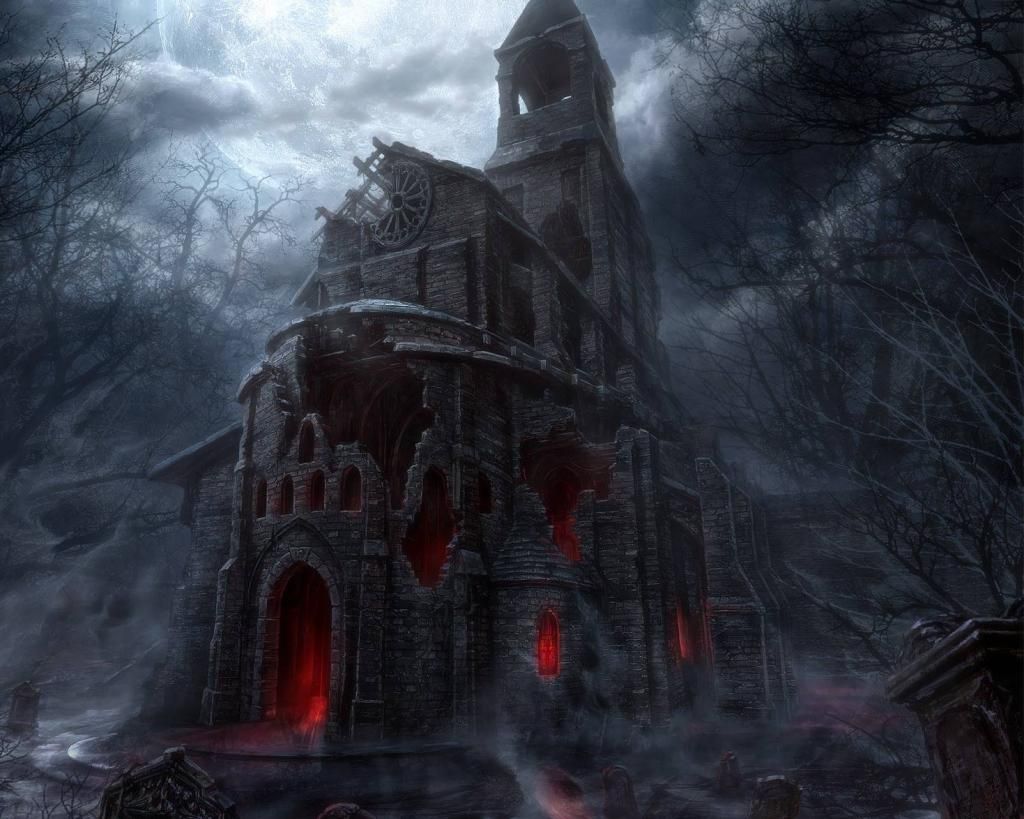
(or of course investigating somewhere like this:)
(or at higher levels trying to go kill this guy:)
(fortunately, in Dark Albion: The Rose War, you'll be able to engage in all of the above, and more!)
But it will probably be the most historically accurate setting for Europe ever done for a D&D-style game that wasn't just purely historical. It's a bit closer to historical accuracy than Pendragon. It's closer to historical accuracy than WFRP's Empire. It will have all kinds of spectacular information for the history buff. But, just like with Arrows of Indra, the first priority will not be historical accuracy, but playability and fun. As a historian, I personally refuse to accept that you can't do both at the same time.
Anyways, stay tuned. Soon you'll be able to see for yourself.
RPGPundit
Currently Smoking: Castello 4k Canadian + Image Latakia
Today, my Everyjoe article presents a stunning development: Has the New York Times gone completely crazy, by posting the image of a revered figure of the Islamic faith covered in elephant dung and surrounded by cut-out pictures of buttocks from pornographic magazines?!
Well, yes. But they did it by accident. They really meant to insult Christianity, of course. And their hypocritical stance on "respect" for (certain) religious images shows just where this newspaper stands on freedom of expression.
Please share it, retweet, go comment, etc. etc. Thanks!
RPGPundit
Currently Smoking: Lorenzetti Solitario Egg + Gawith's Navy Flake
Today I'm just leading you to a link on an analysis of the state of "joylessness" in DC's current comics. I mostly agree with what the article says; I would emphasize that the major problem is that the morons running that company utterly fail to get that the whole deal with DC needs to be, overall, epic archetypal heroics , optimism, and a kind of heroic nobility that has been ridiculously absent from DC's main characters for years now.
Instead, we get pathetic "grimdark" and constantly joyless characters in a joyless story. Kudos to the author for figuring out that the fact that the New-52 literally had no way of effectively doing the Legion of Superheroes is a major symptom of their larger problem.
Anyways, as of now I read nothing of DC's. I've given up again. And I read precious little of Marvel either, since that never really was my bag (but at least Marvel's characters are made for a somewhat more cynical world and can fit better with it; and ironically they have a few truly great titles that in the last few years have done a WAY better job than anything DC puts out at doing either the optimism or heroism or even the Archetype thing).
I think I'm going to have to take another decade off comics books again...
RPGPundit
Currently Smoking: Lorenzetti Solitario Horn + Gawith's Navy Flake