The new and improved defender of RPGs!

Saturday, 7 February 2015

Pundit-Notes From The Great Forge Reunion Battle of 2015: Addendum 3: GMing as a Magical Art


Pundit-Notes From the Great Forge Reunion Battle of 2015

Wherein Ron Edwards Complained That People Still Remembered "Brain Damage", and Were Still mad at him for it;
and Wherein Ron Edwards Tried to Take Credit for the OSR

Addendum the Last:
How Effective World Creation Really Creates a Virtual World


Yes, To Me, GMing is a Magical Art.

Yes, it's true, that the GM can't possibly map everything out or prepare for every eventuality.  But that's not an argument against the idea of the setting being a virtual world; contrary to the efforts of some, it does not make Immersion a myth or an illusion.  Nor is does it mean that the players are somehow moronically required to 'help out' with filling in the world... because the world is already there. 

Instead, what a GOOD GM does is that he Immerses too, in his world. He is infused with a sense of what his world is like. He becomes one with the world.  So when the player asks "is there a magic shop there?"  a good GM isn't just "guessing" or "making something up", he's going INTO that Virtual Reality and checking for the answer that ALREADY EXISTS, beyond him.


(see this? Pretty much a load of narcissistic New Age Bullshit in the real world, but pretty much exactly right in terms of GMing advice)

So yes, it is much less Immersive for a player to get to decide if the magic shop is there, because it means you're creating a fake world, one that has no Archetypal existence.  And the players (and GM) will subconsciously know that, they'll know that its all just a facade.

As a GM, you should be creating a world that exists, that is real, outside of your active consciousness.  You are the architect-god who set its framework, and then it operates at that level of your consciousness where you don't NEED to know every detail about it all the time, you can just tap-into it when necessary to get the answers about what should be going on in any given place or time of that world.

You are, in a certain sense, creating a "magical child" or a "thought-form" in the shape of a little universe. And whether you're any good at doing that or not marks the difference between game worlds that have a life of their own and those that just fall flat (and later make whiny assholes claim that there's 'no such thing as immersion').

RPGPundit

Currently Smoking: Neerup Poker + Brebbia No. 7

Friday, 6 February 2015

Lords Of Olympus: The Walking, Talking, Excessively Accessible Dead


In the Lords of Olympus setting, people can die. NPCs can die, players can die too.  And there's technically no resurrection spell.

However, in one sense dealing with mortality is something that may have more options in LoO than in most other games; the dead are potentially everywhere.

First, there's the multiverse.  Your favorite manservant died in battle? Your girlfriend was murdered by one of Apollo's agents?  Well shit, you can go out and find a clone in a world almost like the one they were from.  This might even get used against you: an enemy might lead you to think your supposedly-dead girlfriend is still alive; and of course as an Olympian you know that she could just be a copy from some other realm... but can you be sure?

Because there's another detail too: everyone who ever dies in Lords of Olympus LITERALLY goes to the Underworld. And the Underworld is an actual place. For an Olympian, its kind of like if in our world everyone you ever gave a fuck about who "died" just ended up in Detroit. You can visit Detroit (though its not usually very nice), you can search around to try to find people in Detroit, if you find them, you might even be able to get them out of Detroit alive (assuming you can figure out a way for them to get a body back)!  Of course, Hades does not care for the idea of people coming into the Underworld intent on taking away HIS inhabitants; he's a bit of a fascist that way.. or it could be something about "cosmic balance", its hard to say.  In either case, if that manservant tied on your armor in just the perfect way, so much so that its really worth the costs, you're going to have to either cut a deal with Hades, trick Hades or oppose Hades if you're going to try to get Manny Armorties back up to the land of the living.


(whatever you do, don't try to play the lyre for him; here a hapless PC is trying that old trick and Hades is like "Fuck's sake, I like ONE lyre-player once, and now every asshole wants me to get his drinking buddy back from the underworld with a song")


And if you can't get there or do those things, you can still also just call "Detroit";  have you got Advanced Scrying? Then you can try to communicate with the spirit of any dead mortal you ever knew from the safety of your own home Realm. If it was Manny's advice you valued more than his armor-tying skills, then you can still consult with him on the problems and tribulations you now face after his unfortunate demise (assuming he's not pissed off about the 23 spearheads in the back he got while helping you escape to safety with nary a scratch; in LoO you can go find the dead without much challenge but that doesn't mean they'll always want to talk to you!).

Ironically, there's one exception in the whole wide multiverse to all this: the Gods.  Those who have Immortality do not live on as spirits in the underworld after death.  And you may find some reasonable facsimile of them out in the multiverse, but its just not the same.  There's only one Hermes, only one Aphrodite, and if they (or any PC who has Immortality) should die, their like will never be seen again.  The Gods alone are truly unique.
Note that a clever player might think this through and decide NOT to get Immortality, so that if he dies in battle he could just be rescued from the Underworld, and while strictly speaking the GM should not just outright deny this possibility he should consider the following points: first, Hades will particularly want to keep as his thralls those who were of Divine Blood. When the day comes that he must march out his armies to fight some great foe, it is these heroes in particular which give him an edge... maybe even an edge over Olympus!  Second, the PC will be as likely to have people, personal enemies or family enemies, who will want to NOT see him back as he will those who want to save him.  Third, unless the PC made very clever preparations indeed, he is likely to be either lost in Asphodel or partying in Elysium; in the former case he will have no memory whatsoever of his former life; in the latter, he will be experiencing such pleasure and bliss he will have been 'enchanted' by it not to wish to ever leave. Though this would pass after leaving the underworld, the PC needs to not only have friends willing to save him, but friends willing to drag him kicking and screaming back to life against his own will.
And of course, the final salient point: this is Lords of Olympus. If you've really got a game where all the players are totally peachy-keen on the idea of teaming up to save a fellow player's dead PC at risk to their own PCs' lives, freedoms or power, then you're probably running it wrong.

RPGPundit

Currently Smoking: Castello 4k Collection Canadian + Image Latakia


(Originally posted December 27, 2013)

Thursday, 5 February 2015

DCC Campaign Update: "Some Sorta Apocalypse Now Scenario"


In today's adventure (slightly shorter than usual due to character creation and a long dinner), the bold adventurers found:

-that Bill the Elf has a long term plan to commit extremely slow genocide on the Cold Mutants by having them execute their own "Decider" over and over again.

-that it seems kind of silly to do an Invoke Patron to try to get Sezrekan to grant you some kind of magical item of 'comprehend languages' when you're sitting on a pile of high-tech elven Universal Translators.

-that all Elven technology makes the same 'boop beep' noises when they're in use; while Dwarven tech makes more of a 'bzz bzz' noise.

-that the "old wise woman" is pretty much the same character in every tribal society they encounter.

-that G.O.D. had, for the first time in maybe ten thousand years, something to say other than "There's an Emergency going on!" or "It's still going on!".

-that unbelievable as it might seem, Marvin the Cleric (who isn't even very high level) is The Chosen One.

-that what he has apparently been charged to do by G.O.D. is to plug in the Sacred USB Cable, after bringing it to the Church of St. Ignatius of File Not Found.

-that it would appear that this is an attempt by G.O.D. to "reload from an earlier version", which would be bad news for any of the Daemons.  So naturally, half the party is secretly working against this sacred mission that could heal the world.

-that no one is quite sure just where the Sacred USB Cable is; but it was last in possession of Archdeacon Hill, a high-level cleric that, according to G.O.D., has become too perverse to fulfill his function as the original Chosen One.

-that incredibly, the yokel Jethro Bucket does in fact know where to find Archdeacon Hill: at a place originally known as the Cave of Tranquility, where his tribe (the Bucket Tribe) live.

-that apparently, Hill's "perversion" is that "he's done set himself up in some sorta Apocalypse Now scenario where we all worship him and give him our most attractive cousins".

-That the Bucket Clan are not named because they wear wooden buckets on their head (only Jethro does that); but rather because the entire Tribe is one large massively inbred family. Bucket is just their last name.

-That the Lord of All Flesh is seriously worried about G.O.D.'s plan, but can't really think of any solution other than to give his agent claws for hands.  Among the daemons, Sezrekan was always the more tactical thinker of the bunch.

-that in spite of humanity's 'endangered species' status, the Buckets have thus far survived because of three simple policies: 1) kill all intruders to their territories, 2) worship Archdeacon Hill and his Old Time Religion, 3) marry their own cousins.

-That Jethro Bucket is ultimately OK with betraying and slaughtering his entire nation/extended-family so long as he gets to keep his attractive cousin, Cindy Lou Bucket.

-That Archdeacon Hill might have been hot stuff once, but one massive Magic Missile later and all that's left of him are his designer boots.

-That the Buckets are pretty ferocious fighters, but most are also too damn stupid to simply walk out of a choking cloud.

-that when Bill the Elf makes the tactical choice to blow up Cindy Lou Bucket, he finds himself obliged immediately afterward to kill Jethro too.

-That, the Bucket tribe mostly wiped out and the Archdeacon just a pair of smoking boots, the PCs are now free to recover the Sacred USB Cable, as well as the huge piles of gold and jewels that the Archdeacon had been hoarding from the yokels for the last several decades.

-That the PCs must now, to get to the Church of St.Ignatius of File Not Found, cross through the area which was once known as the 'peaceful plains', but which they learn is now referred to as the Pampas of Destruction.  They have been warned it is full of dangers, but none so terrible (according to local lore) as a vicious sloth with an automatic weapon of some kind.

-That, however, their first run-in is not with the rumoured sloth but with a horde of 70+ Zombie Gauchos (on Zombie Horses and all).  It was commented that they're like the Argentine version of the "white walkers".

-that Marvin the Cleric is in no way reassured by the notion that, since he is the "Chosen One", it will mean G.O.D. will protect him, since all known evidence points to the contrary.

-that even a horde of that size can be taken down, through careful use of Divine Wrath combined with a clever application of the sequester spell, and a bit of good old fashioned ultra-violence to kill off the stragglers.

-that as they approach the ruins of the ancient Port of GoodWind, the gentle and sweet stream which has nurtured them thus far turns into hideous polluted mess, and the pampas into a grotesque swamp.

-that while most of the PCs are distracted trying to view the ruins of GoodWind from a distance, they are almost taken by surprise by a pair of savage River Trolls, identifiable by their rubbery skin, hideous stench, and red-and-white t-shirts.

-that 75 Zombie Gauchos are no trouble, but two River Trolls can damn near slaughter a party of experienced PCs. They have a lot more experience with hooliganism, after all.

-that while he's pretty well useless in combat, Dr. Theobald the Apeman is a valuable guy to have around during a River Troll attack; because he knows the River Trolls' regenerative power can be stopped with fire, and his quick experimentation reveals that the polluted river is in fact so polluted as to be highly flammable.

-that with most of the PCs severely injured by the time the River Trolls are slain, and a couple of the new 0-level guys ready to level up, the party decides to stop before reaching Port GoodWind, to continue on their quest next time.


RPGPundit

Currently Smoking: Lorenzetti Solitario Horn + Gawith's Navy Flake


Wednesday, 4 February 2015

Pundit-Notes From The Great Forge Reunion Battle of 2015: Addendum 2: Why the GM Must Have Final Authority

Pundit-Notes From the Great Forge Reunion Battle of 2015

Wherein Ron Edwards Complained That People Still Remembered "Brain Damage", and Were Still mad at him for it;
and Wherein Ron Edwards Tried to Take Credit for the OSR

Addendum 2
Why the GM Must Have Final Authority


The fact that the GM has to be able to break the rules doesn't mean he SHOULD, either constantly or even ever; but he must have the power to do so.  Otherwise, you end up with a scenario where self-interested players can end up using rules against the GM for the detriment of the party.

There's only one person at the table whose job it is to make sure EVERYONE Has Fun. That's the GM.

A player who wants everyone to have fun is a nice guy, and hopefully you're playing with nice guys, but there is nothing in the dynamics of the game that demands that he care about whether the other player next to him does well or feels good. His job is to make HIS character do well and for himself to have a good time at the table.

So if a player manipulates the rules, tries to take all the attention or get all the power, that might make the player an asshole but it doesn't make him a "bad Player".
That's why its THE GM's JOB to put limits on him.

If the GM is unable to put limits, because we consider the rules something "superior" to the GM which the GM is not allowed to argue with, then you have a situation where there are no limits (except confidence in the "genius" of some asshole game designer who's never met any of these people playing) as to what the player can accomplish by manipulating the rules.


RPGPundit

Currently Smoking: Lorenzetti Oversize + Image Latakia


Tuesday, 3 February 2015

EveryJoe Tuesday: U.S. Conservatism Needs a Divorce


So, in today's article over at EveryJoe, I talk about how the 'conservative' movement desperately needs a divorce, between the Individualist, free-thinking, liberty-loving, small-government "libertarian" side and the Collectivist, authoritarian, big-government "Political Christianity" side.

As per usual, comments are disabled here, so please go over there and comment! Also, please reshare!

Thanks.

RPGPundit

Currently Smoking: Lorenzetti Solitario Rhodesian + C&D's Pirate Kake

Monday, 2 February 2015

Traveller Campaign Update: Better Call...


The first session went very well, with a sufficient mix of serious roleplay, peels of laughter, crazy goings-on, and setting-tourism.

Very early on, it became clear that the six-man party was going to be divided into two opposing "schools of thought", what we could term on the one case the "sane party", and on the other the "bugfuck crazy asshole party". Strangely, not all of the usual candidates from the player pool fell into their traditional party positions.

The players of the Sane Party were generally trying their damnedest not to learn anything or do anything at all to further involve themselves in the events that were clearly going on in the background around them relating to the mysterious murder of one of the PC's "Uncle Roman".  The other side were mostly going in for it, not quite whole-hog but not really willing to avoid taking the bait.

By the end of the session, the players had learned that among other things, Uncle Roman may or may not have been killed by the mob, that he was apparently a skilled saxophonist, that he still had a crazy bug-eyed 'doc brown' look even in cryogenically-preserved death, that he may have been working for the mob that killed him, and that he was quite the charmer with local nobility and nonagenerian professors alike.   They were also all (even his nephew) rueing the day that they'd ever heard of "Uncle Roman".

They had their ship totally bugged with high-tech devices, gotten into utterly un-necessary bar-fights, met a weird tentacle-alien that was surprisingly polite, and got stranded in the countryside when some assassin's supertech-EMP pulse disabled their vehicles and they couldn't roll a mechanics check to save their life (almost literally).

They also learned that being a Count was exactly impressive enough to warrant having your text messages replied to, but not quite impressive enough to have someone bother to come and see you without further incentive.

Finally, by the end of the session the Sane Party decided that at least one member of the Bugfuck Crazy Asshole Party was just too Bugfuck Crazy and needed to be kicked out of the partnership; unfortunately, the dude didn't want to sell his 10% share in the ship, not even if all the planet's authorities and probably all the planet's mob desperately wanted the group gone.
With neither of the sides willing to compromise, it was time for the Sane Party leader to go hire the Third Imperium's version of this guy:


And take the whole situation to court.

That's where we left off for the day.  When you graduate from murderous mobsters to lawyers, you know you've gone up shit creek without a paddle.  In my last entry, I'd said it looked like they weren't going to be so much playing Star Trek as Guardians of the Galaxy. Now I realize I was wrong again: they're not so much going to be playing Guardians of the Galaxy as they are one meth lab away from playing "Breaking Bad in Space".

RPGPundit

Currently Smoking: Dunhill Shell Diplomat + Presbyterian Mixture

Sunday, 1 February 2015

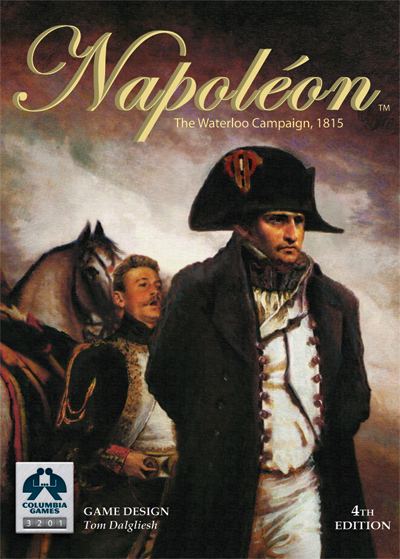
RPGPundit Reviews: Napoleon


This is a review of Columbia Games' wargame "Napoleon".  I don't usually do wargame reviews, but Columbia games has been kind enough to send me several of theirs, which I've reviewed previously; and thus far none of them have been disappointing.  Richard III, Julius Caesar, Wizard Kings, Crusader Rex; all of these have been consistently great. 

Napoleon looks to be no different!  Its a "slipcase" game, a pretty box to put on a bookshelf, and it contains a significant number of wood blocks (and a few dice), with particularly attractive unit-stickers to attach to them; these are the different military forces.  There's some reference sheets (which detail how to initially place the different units to match the historical campaign), an impressively lovely full-color map of the area of the Waterloo campaign (unlike some of the other games, this map is hard board, not just paper), and of course the rules.


One of the things that's great about Napoleon (and all the Columbia games rules in this series) is that it hits what is for me the perfect sweet spot in wargaming.  I don't mind some rules-lite strategy games that are quite simple, if they're well done (Memoir '44 springs to mind as an example of real excellence!), but I don't want something too simplistic.  On the other hand, I also can't stand those strategy games with 40-page rulebooks that take 16 hours of play time to be resolved. 

Napoleon, on the other hand, has a level of complexity that is interesting, strives to create an accurate reproduction of the historical campaign its based on, but the play time on the box is listed as 1-2 hours.  In my experience, I'll note, its a little closer to 1.5-3 hours (potentially even a little over 4 hours if its the first time learning the rules for one or both players), but that's OK by me.  That time range is just perfect; nothing so long, complex and involved as to be restrictive (like many other games I've liked but left sitting idle on my shelf for lack of time to play them, and more than a few that are lying there because they're long AND too complicated and I wouldn't choose to play them even if I had the time!).  Napoleon is just the right length, pace, and complexity for my liking.

The Napoleon rulebook, by the way, is only about 8 pages long.  For someone used to an RPG corebook, its like nothing. Its hard to believe that's the entirety of the system.  And even by wargamer standards, its amazing to see how elegant and thorough the rules are.


So, first and foremost, in case you haven't got the hint yet, "Napoleon" is a game that simulates the 1815 Waterloo campaign; where the English under the great Wellington (along with a couple of continental allies) confronted the monstrous French tyrant and insured his final defeat.  Of course, in the game, things could turn out the other way around. 
This is an historical game; so the primary concern is not for the sides to be "balanced", in the sense of having the same likelihood of winning, but rather the forces are arranged by historical accuracy.  Players can choose to make the initial setup match the historical positions at the start of the campaign, or to set up free-form.

The wooden blocks as units are a clever mechanic concept: they're placed upright in such a way that a player can see the units on his own blocks, but not the unit on enemy blocks; the blocks are only set down and revealed when combat occurs, this simulate the "fog of war"; you know where an opposing unit is situated, but not what its strength consists of.  The blocks also allow for an easy way to keep track of the unit-strength (ie. its "hit points"), rotating the block 90 degrees whenever it takes a hit, reducing its strength (of course, a unit down to 1 strength taking another hit is eliminated).

One of the keys to the short duration of this game compared to others is that play runs fast, and (crucially) there are only a certain number of Turns in the game.  When the turns are done, so is the game (assuming no one wins earlier than that).  To win, the French player has to eliminate a certain number of enemy units before the end of the game, or manage to occupy two of the three major cities on the board anytime after the June 22nd turn (occupying any of these cities also result in losses for the allies each turn, as they are major supply points for the allied forces). In the case that both sides are simultaneously defeated, it is also considered a technical victory for the French. 
The allies (the British and their hangers-on) are victorious if they destroy sufficient french units, OR if the game ends without the French meeting any of their victory conditions (it presumes that without a decisive victory, Napoleon would run out of steam, given his tricky position).

Pieces are positioned on the map and the game takes place in turns; one side resolves all their actions first in the turn, then the other. Actions include movement, where units will move along roads from one town to the next, with certain restrictions on how many units can move on a given road; and with cavalry or horse artillery or leaders getting to move further than infantry; and a special "forced march" rule that lets you move units further but risks reducing their strength. 

Forces that move into the same location as enemy units begin a battle; if there's less than three units on either side then the battle is a skirmish, which has fast and simple resolution; if both sides have 3 or more units, its a full battle.
In the latter case, the blocks involved are moved to a special battle sheet, which features battle areas, each side having a left and right flank and a center, plus a reserve at the back. Players place units on each position and there are special rules each "battle round" for how they can move and fight. Combat is fast and simple, with units rolling a number of regular dice equal to their current strength, and must hit equal or under a certain target number to score a hit. Hits are applied to the highest-strength unit in the opposing forces (in the case of a tie, the opposing player gets to pick which unit takes the hit).  Battle rounds are also done in turns, with the attacker going first, moving and fighting, then the defender gets to respond.  There are morale rules for units who have been reduced to 1 point of strength; if they fail their morale check they may retreat or rout. Cavalry units can charge (getting a to-hit bonus), artillery can fire from outside their own zone, and infantry can "form square" for added morale and to protect leaders or artillery units (and making them more effective against cavalry, though less against enemy infantry or artillery).
The battle lasts until the attacking force fails to engage for two consecutive battle rounds, or when either side is the sole occupant of any enemy zone (in the latter case, the losing side Routs, causing serious damage to all fleeing units).

Three forces have leaders: the Prussians have Blucher, the English have Wellington, and the French have Napoleon.  They grant special bonuses to any accompanying units of their own nationality, reducing the risk of forced marches, improving morale in battle, and having a couple of other modifying factors.  Leaders can be eliminated; leader elimination does not cause defeat in and of itself, not even if Napoleon himself is eliminated.

So how to conclude?  In short, Napoleon, like all the other games in this series I've reviewed, is an awesome wargame.  I figure at this point the company knows that a positive review will be a foregone conclusion, which is why they keep sending me these games at no doubt considerable expense to them (a transaction that I'm quite happy about, of course).  But there's no question to me that if you like historical wargames, especially within the parameters I've given, you're going to really like Napoleon.

RPGPundit

Currently Smoking: Stanwell Deluxe + Image Latakia

(originally posted December 24, 2013)